Ch7-3 · 德国统一 1990 与苏联解体 1991
Superpower Relations and the Cold War, 1944–90 — Unit 7: The End of the Cold War 1985–91
第 3 / 4 讲 1990.10.3 两德统一 Two Plus Four 科尔十点计划 八月政变 1991.8 Belavezha 协议 1991.12 苏联解体 START 条约 教材《A World Divided》Unit 8① 四步主线 · 这一讲你要抓住什么
- 前半段(1990):东德经济崩溃 + 经匈出逃潮 → 柏林墙倒 → 科尔十点计划 → Two Plus Four 谈判 → 1990.10.3 两德统一,统一后的德国留在北约。
- 关键点:戈尔巴乔夫为何让步?他本愿德国"中立",但认为统一"inevitable",且与科尔私交好,遂快速交易。
- 后半段(1991):苏联内部经济危机 + 民族主义 + 八月政变失败 → 各共和国独立 → 1991.12 苏联解体。
- 后果:1991 年苏联正式解散 = "The Cold War was over." 许多西方人视其为"最终胜利"。
知识地图 · 先认脸
Two Plus Four(2+4 谈判)
两德 + 美英法苏四大战胜国,解决统一外部条件的谈判框架。教材虽未明列此词,但过程一致:确定统一后德国留在北约、边界与驻军安排。科尔十点计划(1990)
西德总理科尔提出的统一路线图,主张先"内部"在政治、经济、外交上靠拢,再实现国家统一;配合东德 1990.3 支持统一的政党胜选,说服戈氏接受。八月政变(1991.8)
苏联保守派(含军方高层)软禁戈氏的未遂政变,三天内被叶利钦领导的群众抗议粉碎。政变后戈氏复位但已失控,加速共和国独立。Belavezha 协议(1991.12)
俄罗斯、乌克兰、白俄罗斯领导人签署,宣布苏联解散、成立独立国家联合体(CIS)。12.25 戈氏辞职,苏联正式终结。START 条约(1991)
Strategic Arms Reduction Treaty,美苏大幅削减战略核武器;与 1987 INF 共同标志军控从"限制"走向"削减"。真实地图 · 1990 德国统一(东西德与柏林)
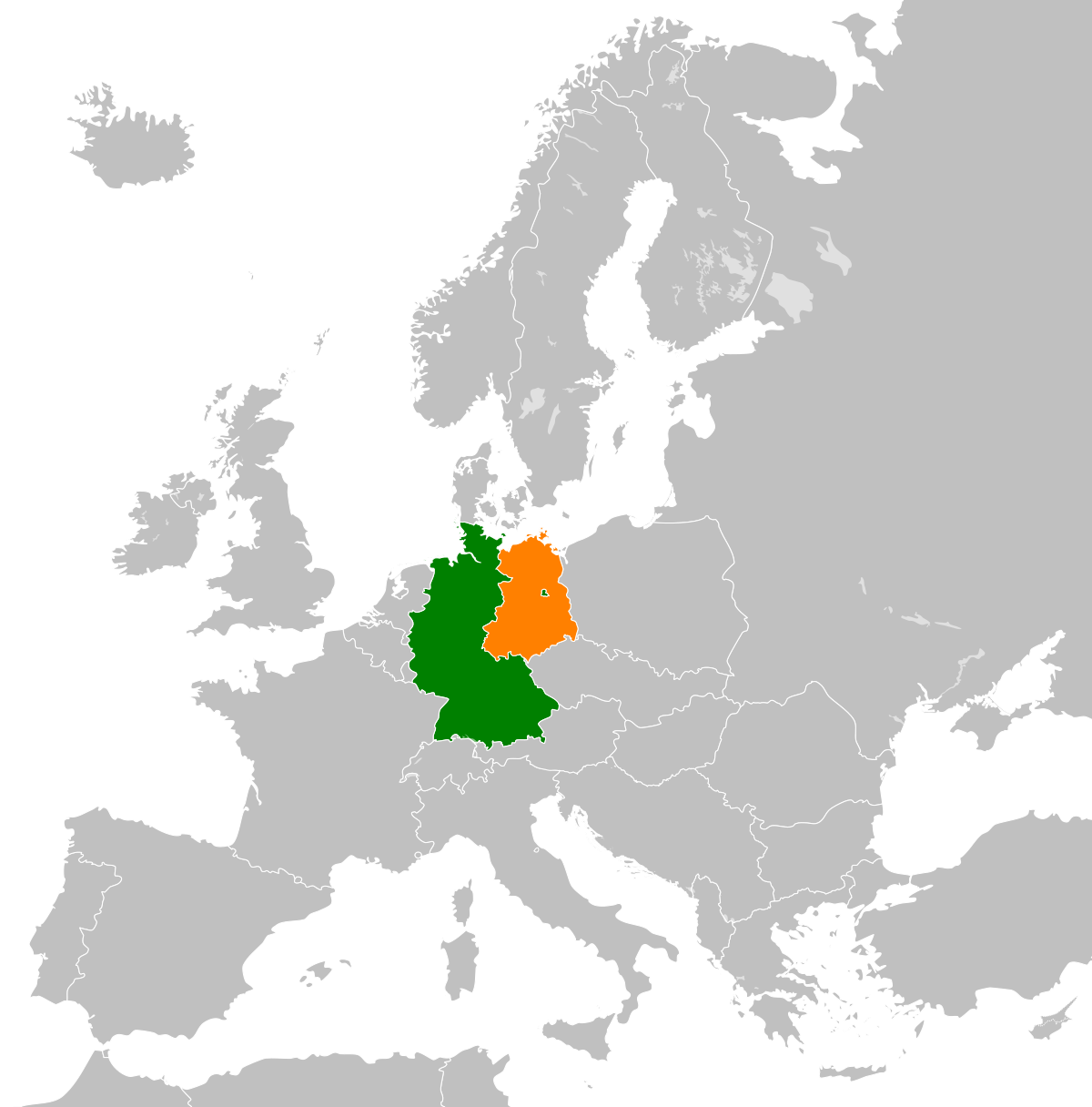
1990.10.3 两德正式统一,统一后的德国留在北约。来源:Wikimedia Commons(TUBS)/ CC BY-SA 3.0。
真实地图 · 1991 苏联解体(各前加盟共和国)
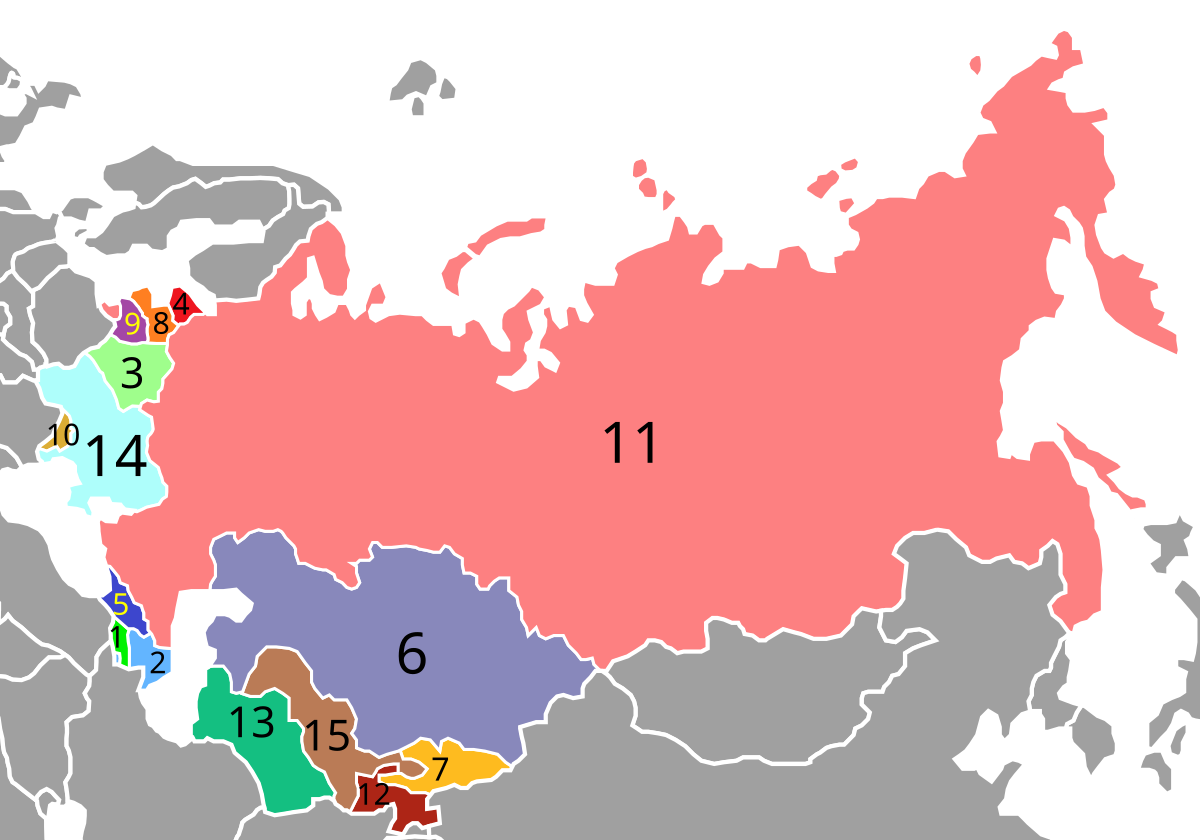
1991.12 苏联各加盟共和国相继独立,红色编号对应 15 个共和国。来源:Wikimedia Commons(Aris Katsaris)/ CC BY-SA 3.0。
背景链 · 从柏林墙到苏联解体(竖向因果)
- 1. 东德经济崩溃:东德是"人造国家",高度依赖苏联;出逃潮(经匈)+ 国内示威使其政权失去合法性。
- 2. 柏林墙倒 → 统一不可逆转:1990.3 东德支持统一的政党胜选,科尔借机推进;两德经济实力差距使统一诉求不可逆。
- 3. 戈氏让步:本愿"中立",但视统一为必然、与科尔私交深,最终接受"统一德国留北约"。
- 4. 苏联内部危机加深:glasnost 暴露斯大林恐怖"万人坑"(1988–89),共产党威信扫地;食品排队、罢工、通胀、腐败蔓延;从"要新点子"到"要推翻整个制度"。
- 5. 民族主义 + 八月政变:波罗的海三国 1990 底独立;1991.8 保守派政变失败,叶利钦崛起。
- 6. 解体:1991.12 Belavezha 协议 + 戈氏辞职,苏联正式解散;START 签约、核武削减,冷战落幕。
主线串讲 · 为什么戈尔巴乔夫既放了东德、又丢了苏联?
| 维度 | 德国统一(1990) | 苏联解体(1991) |
|---|---|---|
| 直接触发 | 东德经济/出逃崩溃 + 人民压力 | 内部经济危机 + 民族主义 + 政变失败 |
| 戈氏角色 | 主动让步(认为必然、与科尔私交) | 改革失控、两面不讨好、最终被架空 |
| 外部因素 | 西方(科尔/美英法)接住、谈判框架 | 西方压力与 SDI 为结构性背景(见 Ch7-4) |
| 结果 | 1990.10.3 两德统一,留北约 | 1991.12 苏联解散,冷战终结 |
📖 史料 · Source K/N(Gaddis 2005 / Bahr 2008 回用于"人民压力")
"1989 年 11 月东德领导人'不再握住历史的缰绳',人民'现在由他们来掌控局面'。"(Bahr)
→ 统一之所以可能,是因为苏联不干预 + 人民压力共同抽走了旧政权的支柱。
📖 史料 · Source O(Robert English, 2005)
"戈氏及其盟友'并未预见到东欧一党统治崩溃的速度';西方领导人拒绝大规模援助 perestroika,而东欧强硬派也未自行改革。"
→ 说明苏联内部改革失败、外部又无援手,是解体加速的重要一环。
深挖 · 一个必考的争议点
问题:苏联解体(1991)的主因,是内部经济危机/民族主义,还是外部西方(德国统一、里根压力)?
- 内部为主:几十年中央计划停滞、glasnost 暴露体制罪恶、民族主义(波罗的海)自发崛起——这些是结构性、内生性的。
- 外部催化:德国统一展示了"另一种制度"的吸引力、西方压力(SDI/军备)拖垮苏联财力;但外部因素是加速器,非根因。
⚠️ 易错:别把"德国统一"说成"导致苏联解体"的直接原因。准确说法:统一是苏联已丧失控制力的体现与象征,而非解体根因;根因在苏联内部危机。考试若问"内外因权重",内因为主、外因为催化最稳。
课后真题四件套 · Ch7-3
① 题目(教材 Unit 8 章末题改编 · 适配本讲)
How far do you agree that the collapse of the Soviet Union in 1991 was caused more by internal economic and nationalist problems than by external pressure from the West?(15 分 · 分析 + 判断)
② Mark Scheme 要点(双向)
- 支持"内因为主":中央计划停滞、glasnost 暴露斯大林罪行、食品排队/罢工/通胀、波罗的海民族主义、八月政变——这些是内生结构性危机。
- 支持"外因为催化":西方(里根 SDI/军备、德国统一示范)构成真实压力,使苏联财力更难维持;但外部是加速器。
- 最佳答案:内因为根、外因为催化;点出二者互动(经济危迫使戈氏改革→改革失控→西方乘势)。
③ 中文思路
第一步定义"collapse of the Soviet Union"(1991)。第二步用内因证据链(经济/glasnost/民族主义/政变)。第三步用外因证据(SDI/德国统一)并定性为"催化"。第四步用 Source O 论证"内部改革失败"关键。第五步判断——内因为主、外因为辅。
④ 英文 EXEMPLAR(约 300 词 · L4–L5 水准)
The dissolution of the Soviet Union in December 1991 was fundamentally the product of internal economic stagnation and rising nationalism, with Western pressure acting as a catalyst rather than a root cause.
Internally, the USSR was exhausted by decades of central planning that delivered stagnation by the 1980s. Gorbachev's glasnost uncovered buried truths — the discovery of Stalin-era mass graves in Belarus and Ukraine in 1988–89 — that shattered the Communist Party's moral authority. Meanwhile living standards failed to rise; food queues, strikes over unpaid wages, inflation and corruption spread. What began in 1985 as a call for "new ideas" had by 1989 become a demand to "dismantle the whole system." Nationalism compounded this: the Baltic republics declared independence by late 1990, and the failed August 1991 coup — crushed by popular resistance led by Yeltsin — left Gorbachev a figurehead, accelerating republican secession. As Source O (English) notes, Gorbachev "did not anticipate the rapidity" of collapse, and Western leaders refused to bail out perestroika — but the weakness was endogenous.
External pressure mattered, yet was secondary. Reagan's SDI and the broader arms competition strained an already failing economy, and German reunification in 1990 demonstrated the attractiveness of the alternative system. These factors sharpened the crisis but did not create it; a solvent, legitimate Soviet state could have absorbed them.
In conclusion, the USSR collapsed principally because its own economy and nationality structure were unsustainable, exposed by glasnost and unraveled by nationalism and failed reform. Western pressure, including German reunification, hastened the end but was not its cause. To attribute 1991 to the West alone would mistake the catalyst for the disease.
⑤ 自检清单
- ☐ 有没有列"内因"完整证据链(经济/glasnost/民族/政变)?
- ☐ 有没有把"西方压力"定性为催化而非根因?
- ☐ 有没有用 Source O 支撑"内部改革失败"?
- ☐ 结尾判断是不是"内因为主、外因为辅"的平衡式?
拓展阅读
- 教材 Unit 8 timeline(8.5)含关键日期:1989.9 匈开边境、1989.11 柏林墙、1990.10 统一、1991 各共和国独立——可直接做时间轴复习。
- 教材 Unit summary:西方经济压力 + 戈氏新思维 + 放弃勃列日涅夫主义 + 人民压力 + 军控协议,共同终结冷战;1991 苏联解散即"西方胜利"。