Ch7-2 · 东欧剧变 1989
Superpower Relations and the Cold War, 1944–90 — Unit 7: The End of the Cold War 1985–91
第 2 / 4 讲 团结工会胜选 匈牙利开放边境 柏林墙倒塌 1989.11.9 天鹅绒革命 齐奥塞斯库被处决 Sinatra doctrine result not cause 教材《A World Divided》Unit 8① 四步主线 · 这一讲你要抓住什么
- 前提(来自 Ch7-1):戈尔巴乔夫放弃勃列日涅夫主义,对东欧"不干涉"——东欧各国第一次可以自己决定命运。
- 连锁(1989):波兰团结工会胜选 → 匈牙利开放边境 → 东德出逃潮 → 柏林墙倒塌 → 捷克斯洛伐克天鹅绒革命 → 罗马尼亚处决齐奥塞斯库。
- 关键机制:不是苏联被打垮,而是苏联不伸手;人民压力 + 经济崩溃合力冲垮了低效共产党政权。
- 后果:到 1989 年底,每个亲苏政权都已瓦解;冷战在欧洲的"对抗根基"被拔除,为 1990 德国统一与 1991 苏联解体铺路。
知识地图 · 先认脸
团结工会(Solidarity)
波兰独立工会,1980 年由瓦文萨创立,峰值千万会员;1981 戒严被禁,1989 重合法化并在自由选举中压倒共产党。是东欧"第一张倒下的多米诺骨牌"。Sinatra doctrine(辛纳特拉主义)
西方对戈氏"各国可自行决定"立场的戏称("My Way")。教材未用此词,但明确 1989 年苏联对波兰/匈牙利"took no action… even offered encouragement"——即允许东欧自选政府。天鹅绒革命(Velvet Revolution)
1989.11 捷克斯洛伐克近乎无血的政权更迭,剧作家哈维尔当选总统,故称"天鹅绒"。后分裂为捷克与斯洛伐克。柏林墙倒塌(1989.11.9)
东德政权本想"渐进开放",却因沙博夫斯基误读"立即生效",群众涌入西柏林。教材强调这是"误解引发的雪崩"——人民"running the show"。齐奥塞斯库(Ceaușescu)
罗马尼亚独裁者(1965–89),cult of personality 极端;1989.12 蒂米什瓦拉示威触发全国起义,圣诞日被处决。是唯一伴随大规模流血的东欧剧变。真实地图 · 1989 年华约阵营的共产主义垮台(按国别)
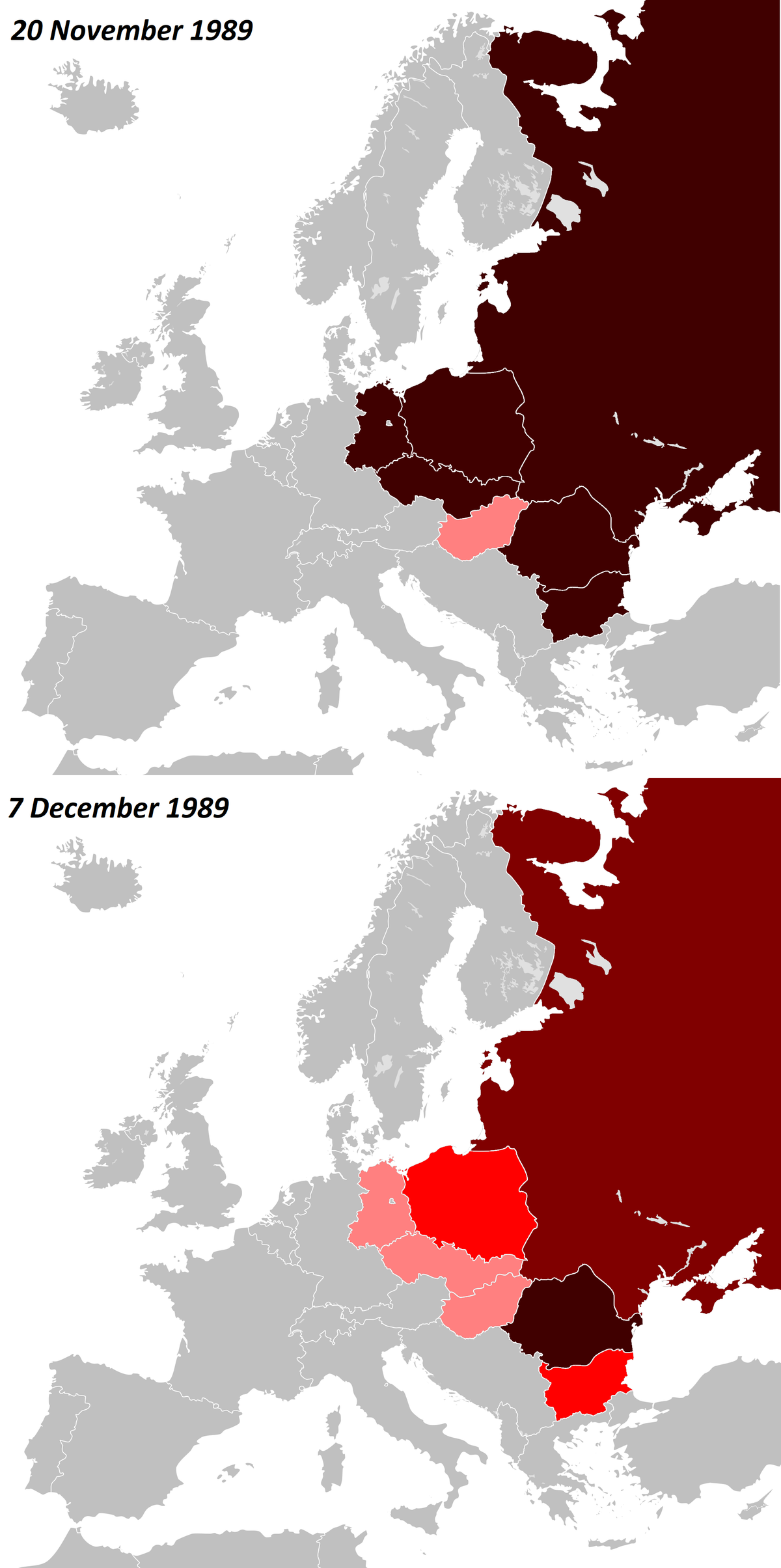
1989 年底,华约各国(波、匈、东德、捷、罗)共产党政权相继垮台;颜色标记显示政权更迭的推进。来源:Wikimedia Commons / CC BY-SA 3.0。
背景链 · 1989 多米诺如何倒下(竖向因果)
- 1. 戈氏不干涉(根):放弃勃列日涅夫主义,1989 年对波兰/匈牙利"不阻止甚至鼓励",东欧失去苏联军事后盾。
- 2. 波兰破冰:1989.6 团结工会在自由选举压倒共产党,9 月非共政府上台——示范效应极强。
- 3. 匈牙利开边境:1989.9 开放与奥地利边界,仅 9.11 一天就有 125,000 东德人经匈逃往西方,重创昂纳克政权。
- 4. 东德崩塌:出逃潮 + 国内示威 + 经济"人造国家"属性;昂纳克病倒被罢免,克伦茨不愿镇压,11.9 柏林墙被人民拆除。
- 5. 捷克 / 罗马尼亚:11 月捷克天鹅绒革命;12 月罗马尼亚血腥起义、齐氏被处决——1989 年内全部亲苏政权瓦解。
- 6. 苏联为何不救:撑低效政权代价高、道德上反对武力、阿富汗教训、东欧已非安全必需反成财政负担。
主线串讲 · 1989 东欧革命一览
| 国家 | 关键事件 | 是否流血 | 苏联角色 |
|---|---|---|---|
| 波兰 | 1989.6 团结工会自由选举胜出,9 月非共政府 | 和平 | 不干预、默许 |
| 匈牙利 | 1989.9 开放奥地利边境,放跑大批东德人 | 和平 | 不干预 |
| 东德 | 1989.11.9 柏林墙被人民拆除 | 基本和平 | 不干预 |
| 捷克斯洛伐克 | 1989.11 天鹅绒革命,哈维尔任总统 | 和平 | 不干预 |
| 罗马尼亚 | 1989.12 蒂米什瓦拉起义,齐奥塞斯库圣诞日被处决 | 流血(约数百人) | 已无力干预 |
📖 史料 · Source L(Mike Dennis, The Rise and Fall of the GDR, 2000)
"沙博夫斯基因不熟悉细节、疏忽了'次日生效'条款,脱口说出'现在就可以过境';尽管克伦茨本不愿开墙,但'群众压力如此之大,最终的开放不会拖延太久'。"
→ 这段话支持"柏林墙倒塌有偶然性、由人民压力驱动"的论点。
📖 史料 · Source N(Christian Bahr, Divided City, 2008)
"一个误解诞生了,它引发了一场雪崩……谣言变成了真相。1989 年 11 月,东德领导人'不再握住历史的缰绳',人民'现在由他们来掌控局面'。"
→ 与 Source L 互证:柏林墙倒塌是"结果而非原因",是人民主动性冲垮旧政权的象征。
深挖 · 一个必考的争议点
问题:柏林墙倒塌(1989.11)到底是东欧剧变的原因还是结果?
- 是"结果"(教材 Skills Builder 标准答案方向):波兰选举、匈牙利开边境、东德出逃潮——柏林墙倒塌前东欧对抗根基已被动摇;墙倒只是压轴仪式。
- 但也是"催化剂":墙倒的电视画面鼓舞了捷克、罗马尼亚,加速了后续剧变;象征意义不可低估。
⚠️ 易错:答题时若要论证"柏林墙是 result rather than cause",必须先用波兰/匈牙利/出逃潮的证据说明"地基已塌",再谈墙倒是象征性收尾。反过来若论证"墙倒是 trigger",也要承认它建立在既有的连锁之上。双边论证最稳。
课后真题四件套 · Ch7-2
① 题目(教材 Unit 8 章末题改编 · 适配本讲)
How far was the fall of the Berlin Wall in November 1989 a result rather than a cause of the collapse of Soviet control over Eastern Europe?(15 分 · 分析 + 判断)
② Mark Scheme 要点(双向)
- 支持"是结果":波兰 1989.6 自由选举、匈牙利 1989.9 开边境、东德经匈出逃潮(9.11 单日 12.5 万人)——这些都在墙倒之前;苏联不干涉是根因(Source L/N 证"人民掌控局面")。
- 支持"也是催化":墙倒画面鼓舞捷克/罗马尼亚、象征铁幕崩塌,加速了收尾;若无墙倒,残存政权可能拖延。
- 最佳答案:承认墙倒是压轴仪式(result),但点出其象征催化作用;根因归于戈氏不干涉 + 连锁革命 + 经济崩溃。
③ 中文思路
第一步定义"collapse of Soviet control"的时间(1989 全年)。第二一步用"墙倒之前"的证据链(波/匈/出逃)证明"地基已塌"。第三步用 Source L/N 论证"人民压力/偶然性"。第四步补一刀"墙倒的象征催化"。第五步判断——result 为主、catalyst 为辅。
④ 英文 EXEMPLAR(约 300 词 · L4–L5 水准)
The fall of the Berlin Wall on 9 November 1989 was more a dramatic climax than a cause of the collapse of Soviet control over Eastern Europe. By the time the wall came down, the foundations of that control had already crumbled.
The decisive shift occurred earlier in 1989 and rested on Gorbachev's refusal to enforce the Brezhnev Doctrine. In Poland, free elections in June 1989 delivered a crushing victory to Solidarity and a non-communist government formed in September. In Hungary, the opening of the border with Austria in September allowed 125,000 East Germans to flee westward in a single day, fatally undermining the Honecker regime. These events preceded the wall's fall and demonstrate that Soviet hegemony was already eroding from within and without.
The wall's collapse itself was almost accidental. As Source L (Dennis) records, Schabowski's garbled announcement — confusing "next day" with "immediate" — let crowds pour into West Berlin; yet even without that mistake, popular pressure was so intense that opening "could not have been long delayed." Source N (Bahr) reinforces this: a "misunderstanding caused an avalanche," and by November the East German leadership "no longer held the reins of History" — the people were "running the show." This strongly supports the view that the wall fell because control had already gone, not the reverse.
Nonetheless, the wall's fall was not wholly without causal effect. The images of joyful reunion accelerated the Velvet Revolution in Czechoslovakia and the violent uprising in Romania, providing a powerful symbol that made the irreversibility of change visible. In that limited sense it acted as a catalyst for the final acts of 1989.
In conclusion, the fall of the Berlin Wall was predominantly a result of the collapse of Soviet control — the product of Gorbachev's non-intervention, earlier revolutions, and popular pressure — though its symbolism helped catalyse the last dominoes. To call it the cause would invert the chronology of 1989.
⑤ 自检清单
- ☐ 有没有先证明"墙倒之前地基已塌"(波/匈/出逃)?
- ☐ 有没有用 Source L / N 解释"偶然性 + 人民压力"?
- ☐ 有没有承认墙倒的"象征催化"作用(避免绝对化)?
- ☐ 结尾判断是否平衡(result 为主、catalyst 为辅)?
拓展阅读
- 教材 Unit 8 Skills Builder 第 2/3 题即考"柏林墙是 result 还是 cause"——必练。
- John Lewis Gaddis《The Cold War》(2005):关于 1989 年人民主动性与戈氏"regime was doomed"的判断。