Ch6-2 · 里根与对抗:SDI、军备竞赛与"里根主义"
Superpower Relations and the Cold War, 1944–90 — Unit 6: The "Second" Cold War 1979–85
第 2 / 4 讲 1981 里根上任 13% 国防增支 1983.3 SDI 星球大战 里根主义·支援反共游击队 零抉择·欧洲导弹 Evil Empire 演说 教材《A World Divided》Ch8① 四步主线 · 这一讲你要抓住什么
- 人物登场:1981.1 里根上任,把"对苏强硬"从边缘推上美国主流。
- 两条主线:① 史无前例的军备扩张(国防开支 1982 +13%、SS-20、SDI);② 里根主义——全球支援反共游击队。
- 关键武器:1983.3 提出的 SDI(星球大战),用技术优势拖垮苏联经济。
- rhetorically:1983.3 "Evil Empire" 演说、1983.10 入侵格林纳达,全面对抗姿态。
知识地图 · 先认脸
里根主义(Reagan Doctrine)
向反共游击队和反共政府提供援助,以在第三世界"逆转"苏联扩张。典型案例:尼加拉瓜的 Contras(反对桑地诺政权)、萨尔瓦多右翼政府。SS-20 导弹
苏联 1970 年代部署的机动中程核导弹,精度高,针对西欧。里根借此论证"苏联在扩军",为美国扩军背书。SDI(战略防御倡议)
1983.3 里根宣布的太空反导系统,俗称"星球大战"。目标是在太空拦截敌方导弹,迫使苏联在技术上"陪跑"直至经济破产。"Evil Empire" 演说(1983.3)
里根把美苏对抗描述为"善与恶"的道义之战,公开抛弃缓和时期的"共处"语言。零抉择(Zero Option)
1981 里根提出:若苏联撤除 SS-20,美国就不在西欧部署 Pershing II 与巡航导弹。表面对等,实为谈判筹码。格林纳达(1983.10)
美军入侵加勒比岛国推翻左翼政府,展示"里根主义"的军事执行力,也是对苏联/古巴影响力的直接打击。真实图片 · 里根与 SDI(1983)
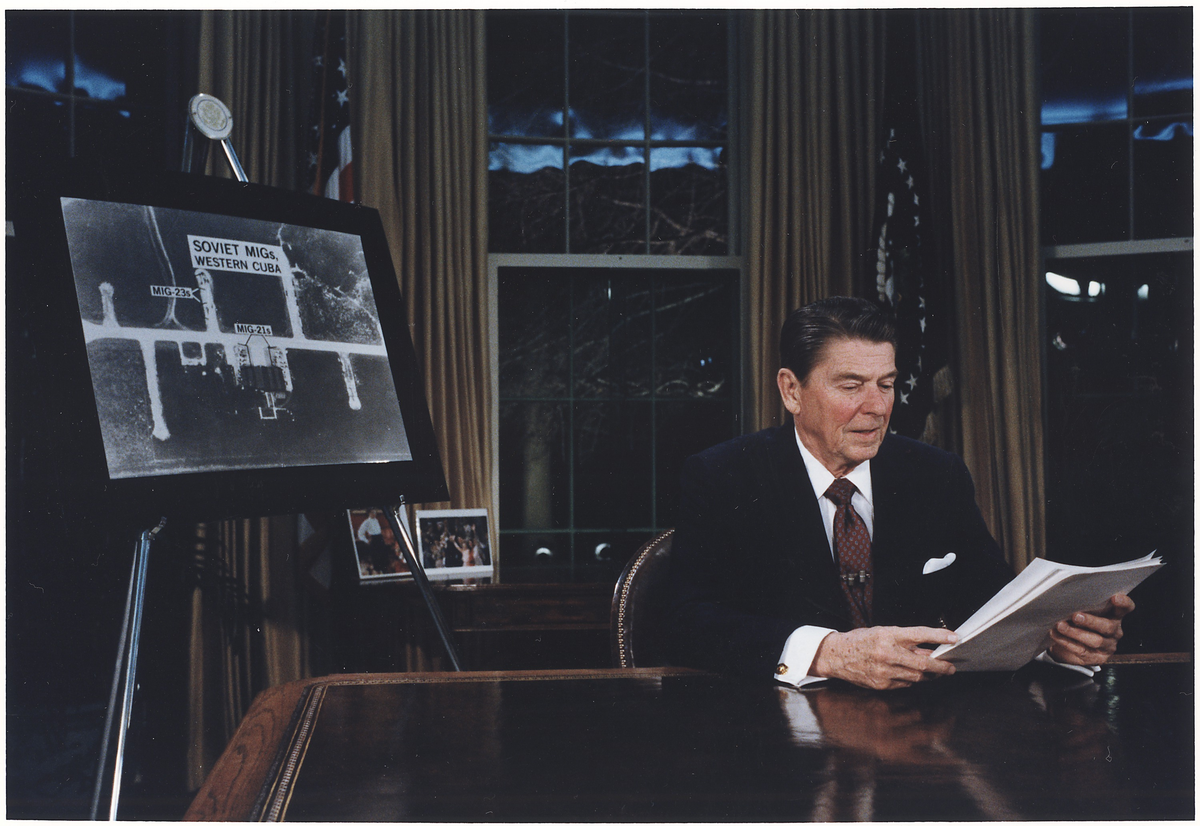
1983.3 里根提出"战略防御倡议"(SDI,星球大战),意图在太空拦截导弹、用技术优势拖垮苏联经济。
背景链 · 里根为何能"全面翻案"缓和?(竖向因果)
- 1. 卡特时期已埋下强硬种子:教材指出,对苏转向强硬"在卡特任内(1977–80)已是趋势",布热津斯基的影响就是证明——里根是"集大成"而非凭空出现。
- 2. 阿富汗提供了弹药:苏联入侵让"苏联仍在扩张"成为美国两党共识,扩军获得国会支持。
- 3. 新保守派上位:共和党+民主党内鹰派罕见地跨党派联合,呼吁"结束缓和、重拾强硬"。
- 4. 公众心理转变:伊朗人质危机 + 苏联扩张让美国选民对"软弱外交"厌倦,里根的 straightforward 反共话语正中下怀。
主线串讲 · 里根的"军事化反革命"两大支柱
| 支柱 | 具体动作 | 对冷战的意义 |
|---|---|---|
| ① 军备扩张 | 国防开支 1982 +13%、后两年各 +8% 以上;新部署 Stealth 轰炸机、Trident 潜艇;1983 提出 SDI。 | 以"实力地位"逼苏联谈判;SDI 瞄准苏联技术短板,意图拖垮其经济。 |
| ② 里根主义 | 援尼加拉瓜 Contras、撑萨尔瓦多右翼政府;1983 占格林纳达。 | 把对抗推进到苏联"后院"与第三世界,逆转 1970 年代苏联扩张。 |
| ③ 话语升级 | 1983.3 "Evil Empire" 演说;把冷战说成道义之战。 | 终结缓和的"共处"修辞,重塑美国反共共识。 |
📖 史料 · Source F(David Painter, 1999)
"SDI 是一个技术上野心极大、极其昂贵的计划……许多分析家视其为对'相互威慑'的危险且破坏稳定的攻击……并警告 SDI 会加速军备竞赛。"
→ 注意:连美国本土分析家都担心 SDI 破坏稳定——它不是单纯"防御"。
📖 史料 · Source H(John Lewis Gaddis, 2005)
"里根对 SDI 深信不疑……他[的演说]说服了愈发惊恐的苏联领导人:这即将发生。在追赶进攻导弹已耗尽国力的他们,突然面对新一轮他们毫无希望掌握的技术竞争……克里姆林宫的反应'近乎恐慌'。"
→ Gaddis 的观点:SDI 的心理威慑比实际技术更致命——它戳中了苏联经济的软肋。
深挖 · 一个高频考试角度
争议:里根是"拖垮苏联的英雄"还是"把世界推向核对抗的冒险家"?
- 支持方(美国右翼叙事):里根的军备压力 + SDI 让苏联经济无以为继,是冷战胜利的关键变量;他 1985 后对戈尔巴乔夫的灵活又证明"以实力求和平"奏效。
- 质疑方(左翼/修正派):SDI 可能破坏 MAD(相互确保摧毁)威慑、加速军备竞赛;1983 年北约部署欧洲导弹 + KAL 007 让美苏一度逼近热战。
- 教材平衡结论:里根"用实力逼谈判"的策略确实在 1985 后转化为外交成果(日内瓦/雷克雅未克/华盛顿峰会),但 1983 年的对抗强度本身也制造了风险。
⚠️ 易错:写"SDI 真的建出来了"是错的——SDI 在 1980 年代从未实际部署,其威力在于"预期"与"经济拖拽"。考题若问"SDI 成功了吗",要答"技术未成,但战略威慑达成"。
课后真题四件套 · Ch6-2
① 题目(教材《A World Divided》Ch8 SKILLS BUILDER 改编 · 适配本讲)
To what extent was Reagan's policy of militarised counter-revolution responsible for the renewal of superpower confrontation in the early 1980s?(15 分)
② Mark Scheme 要点(双向)
- 同意(里根责任大):军费史无前例增长、SDI 破坏稳定、里根主义全球反苏、Evil Empire 修辞终结缓和话语、欧洲导弹部署升高紧张。
- 不同意(里根非主因):转向强硬在卡特时期已启动;苏联自身扩张(阿富汗、第三世界)+ 老人政治僵化才是深层;里根 1985 后其实转向外交。
- 最佳答案:里根"加速了"对抗并塑造了对抗的形态,但结构性矛盾(苏联扩张、体制僵化)先于他存在。
③ 中文思路
先界定"militarised counter-revolution"= 军备扩张 + 里根主义 + SDI;列里根的具体动作作为"同意"证据;再用"卡特已有趋势 + 苏联自身问题"作为"不同意"证据;结尾给程度判断(largely / significantly but not solely)。
④ 英文 EXEMPLAR(约 330 词 · L4–L5 水准)
Reagan's policy of "militarised counter-revolution" was a major accelerator of renewed superpower confrontation in the early 1980s, but it was not its sole cause; the underlying tensions predated his presidency.
Reagan undoubtedly intensified the confrontation. From 1981 he secured unprecedented defence increases — 13 per cent in 1982 and over 8 per cent in each of the following two years — and developed new delivery systems such as the Stealth bomber and Trident submarines. Centrally, the Strategic Defense Initiative (SDI, 1983), nicknamed "Star Wars", aimed to regain US military supremacy so that Washington could extract concessions "from a position of strength". The Reagan Doctrine extended aid to anti-communist insurgents (the Contras in Nicaragua) and governments (El Salvador), while the 1983 invasion of Grenada signalled a willingness to use force. Rhetorically, the "Evil Empire" speech reframed the struggle as a moral crusade. As Source F shows, SDI was viewed even by analysts as a destabilising attack on mutual deterrence that would accelerate the arms race.
Yet confrontation had deeper roots. The shift to a harder line was already visible under Carter, encouraged by National Security Adviser Brzezinski, and the Soviet invasion of Afghanistan (1979) had already ended détente before Reagan took office. Moreover, Soviet conduct — expansion in Angola, Ethiopia and Afghanistan — and the paralysis of an aged leadership (Brezhnev, then Andropov, then Chernenko) generated tension independently of US policy. Source H suggests SDI's real impact was psychological: it panicked Soviet leaders who could not match the technology, straining an economy already under pressure.
In conclusion, Reagan's militarised approach shaped both the intensity and the form of the Second Cold War, but the renewal of confrontation rested on pre-existing structural causes. His policy was a powerful catalyst rather than the original source of the conflict.
⑤ 自检清单
- ☐ 有没有定义"militarised counter-revolution"包含哪些动作?
- ☐ 有没有引 Source F / H?
- ☐ 有没有"卡特已有趋势"这条反证?
- ☐ 结尾是不是"催化剂而非根源"的平衡判断?
拓展阅读
- 教材 p.162 Investigation "Star Wars" 的 Source F/G/H 三联读,是 SDI 题的标准材料组合。
- 想深入里根战略:看 1983 年欧洲反核抗议(核冬天理论)如何反衬 SDI 的争议性。