Ch6-1 · 缓和终结:苏联入侵阿富汗 1979 与卡特主义
Superpower Relations and the Cold War, 1944–90 — Unit 6: The "Second" Cold War 1979–85
第 1 / 4 讲 1979.12 苏联入侵阿富汗 1979 伊朗革命 1980 莫斯科奥运抵制 PD-59 核扩军 SALT II 撤回 第二次冷战起点 教材《A World Divided》Ch7① 四步主线 · 这一讲你要抓住什么
- 起点(1979 前):缓和已摇摇欲坠——苏联在第三世界扩张、美国新保守派抬头、勃列日涅夫病重决策迟缓。
- 导火索:1979.12 苏联坦克开进阿富汗 → 卡特认定"扩张主义没变",缓和彻底死亡。
- 美国的反制:撤 SALT II、禁运、抵制 1980 莫斯科奥运、PD-59 核扩军、联手撒切尔。
- 后果:第二次冷战正式开打,为 1980 年里根上台"以实力求和平"铺路。
知识地图 · 先认脸
缓和(Détente)
1970 年代美苏"以谈判代替对抗"的有限合作期。教材强调:它不是冷战结束,而是"以别种方式继续冷战"——双方都觉得对自己有利才维持,一旦不再有利就散伙。新保守派(neo-conservatives)
美国 1970 年代兴起的右翼势力,认为苏联在安哥拉、埃塞俄比亚的扩张证明"共产主义仍在扩张",主张对苏强硬、结束缓和。卡特主义(Carter Doctrine)
1980 年卡特宣布:波斯湾地区是美国的" vital interest(切身利益)",任何外部势力试图控制此地都将被视为对美国利益的威胁(直接针对苏联在阿富汗/伊朗的推进)。SALT II(第二阶段限制战略武器条约)
1979.6 卡特与勃列日涅夫签署,规定双方战略武器上限。阿富汗入侵后卡特撤回参议院审批,条约从未生效。PD-59(总统指令 59 号)
1980 年卡特签署,授权大幅增加美国核武库,标志"军备限制时代结束"。勃列日涅夫主义
1968 年后苏联的干涉教条——"社会主义大家庭的主权是有限的",盟友若脱离阵营苏联可出兵。阿富汗即其延伸。真实地图 · 1979 苏联入侵阿富汗(区位与缓冲国)
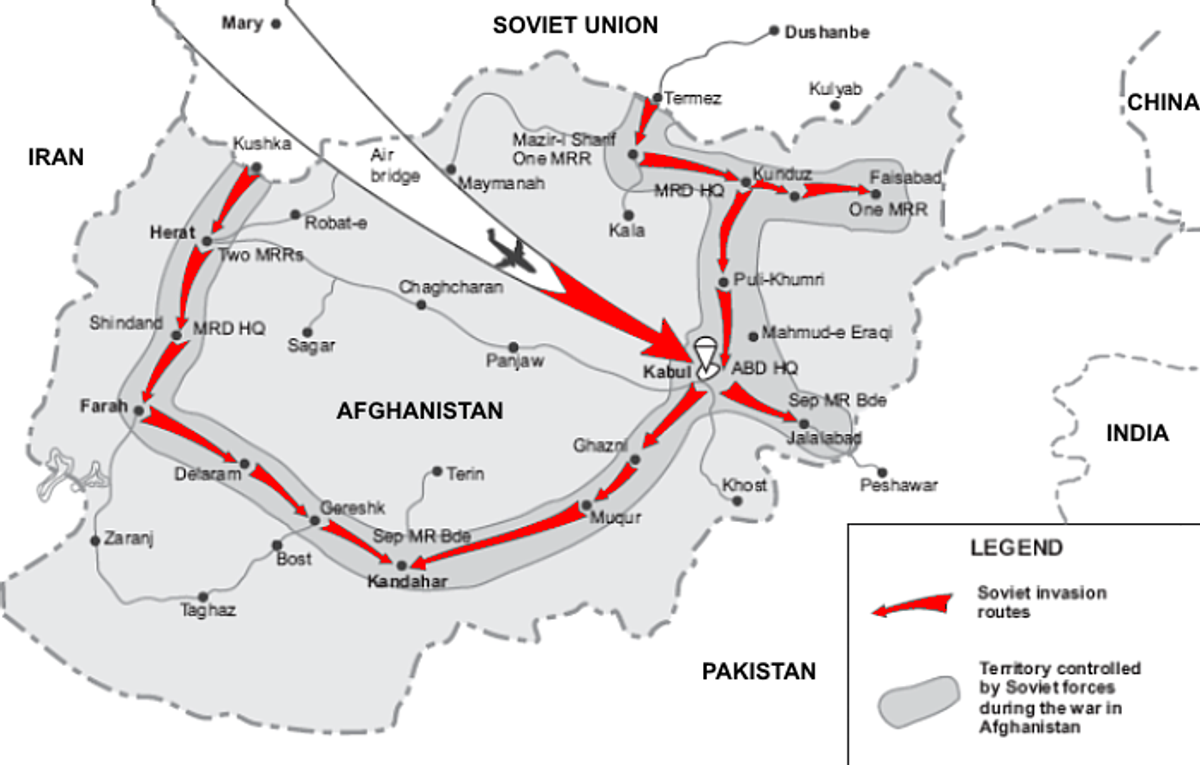
阿富汗在苏联南侧,是抵御穆斯林原教旨主义外溢的缓冲国;1979.12 苏军 10 万+ 进驻,沦为"苏联的越南"。
背景链 · 缓和为何 1979 年前就快死了?(竖向因果)
- 1. 苏联在第三世界扩张:安哥拉(1975)、莫桑比克、埃塞俄比亚(1977)陆续出现亲苏政权,新保守派借此论证"苏联从未放弃扩张"。
- 2. 赫尔辛基人权条款反噬:1975 赫尔辛基协议要求签约国尊重人权,苏联的违反让美国国会良心不安、对苏批评增多。
- 3. 勃列日涅夫病重:1970 年代中期起多次心脏病,1979 年靠药物维持,决策极慢;美方更容易采纳布热津斯基(Brzezinski)的强硬路线。
- 4. 伊朗革命(1979.1):美国支持的巴列维国王被霍梅尼推翻,新政权亲苏倾向 + 反美,伊朗石油利益受威胁。
- 5. 德黑兰人质危机(1979.11):伊斯兰极端分子占领美使馆扣 52 人至 1981.1,被视为"美国衰落"的象征,右翼要求更强硬。
- 6. 苏联内部也不满缓和:政治局对赫尔辛基的批评、军方要求恢复扩军以支撑全球野心——双方都在往对抗滑。
主线串讲 · 阿富汗:压垮缓和的"最后一根稻草"
| 维度 | 发生了什么 | 为什么重要 |
|---|---|---|
| 地缘位置 | 阿富汗在苏联南侧,是缓冲国;邻国伊朗革命让它更关键。苏联担心穆斯林原教旨主义外溢到本国中亚加盟共和国。 | 莫斯科视其为"家门口的安全"问题,不容失控。 |
| 直接触发 | 1979 夏 CIA 威胁支持阿富汗反苏派别,勃列日涅夫决定直接出兵扶植亲苏政权。 | 12 月出兵 10 万+,沦为"苏联的越南"——打不赢的游击战泥潭。 |
| 西方反应 | 卡特措辞比预期更激烈,撤 SALT II、断贸易、促奥运抵制、签 PD-59 扩核。 | 教材原话:"军备限制时代结束了。" |
| 英国配合 | 新任首相撒切尔(1979)是铁杆反共者,力挺美国强硬路线。 | 英美"特殊关系"在第二次冷战中重新咬合。 |
| 政治后果 | 阿富汗成为 1980 美国总统大选核心议题,卡特显得软弱,里根胜出。 | 把"对苏强硬"推上美国主流议程。 |
📖 史料 · Source N(Richard Saull, 2007)
"阿富汗的苏联介入之后,美国反应迅速。结合伊朗动荡与苏联在非洲之角(埃塞俄比亚)的扩张,美国严重担忧苏联意图不限于阿富汗,而是更广阔区域、尤其波斯湾……美国回到高度军事化、对抗性的对苏路线,并为次年上任的、本能批判缓和的里根奠定了基础。"
→ 注意:这段史料把"阿富汗"放在一系列苏联扩张的脉络里,而非孤立事件。
📖 史料 · Source P(Martin Walker, 1994)
"1970 年代中期的华盛顿气氛非同寻常……两党都越来越大声地主张结束缓和、重拾强硬。这不是某个单一苏联行动扭转了天平,而是疑虑的积累,把对缓和的不信任扩大到许多原本的鹰派之外的人。"
→ 这段话支持一个考试高频论点:阿富汗是缓和崩溃的"象征"而非"原因"。
深挖 · 一个必考的争议点
问题:阿富汗入侵到底是缓和崩溃的原因还是结果/象征?
- 是"最后一根稻草"(催化剂):教材明确说"détente was already breaking down"——双方内部、第三世界、领导层健康都已在瓦解,阿富汗只是让卡特公开彻底放弃缓和的引线。
- 但缓和的内在脆弱早就埋雷:美国与苏联对"缓和到底是什么"理解不同(美视为合作,苏视为"以别种方式继续冷战"),所以冲突迟早回归。
⚠️ 易错:别写"阿富汗导致冷战重起"。准确说法是"阿富汗是催化剂,缓和在此前已因结构性矛盾而濒临死亡"。考试若让你评估"阿富汗是 symbol 还是 cause",必须两边都说。
课后真题四件套 · Ch6-1
① 题目(教材《A World Divided》Ch7 章末题改编 · 适配本讲)
How far do you agree that the Soviet invasion of Afghanistan in 1979 was the main cause of the collapse of Détente?(15 分 · 分析 + 判断)
② Mark Scheme 要点(双向)
- 同意方:阿富汗是压垮缓和的最后一根稻草;卡特因此撤 SALT II、断贸易、扩军;奥运抵制;为里根强硬路线铺路。
- 反对方(更稳的论点):缓和此前已因苏联第三世界扩张、赫尔辛基人权反噬、勃列日涅夫病重、伊朗革命、人质危机而摇摇欲坠;Source P 明言"不是单一行动,而是疑虑积累"。
- 最佳答案:承认阿富汗是催化剂,但强调结构性脆弱才是根因,给出平衡判断。
③ 中文思路
第一步先定义"collapse of détente"的时间边界(约 1979);第二步列"阿富汗之前"的 5 条背景链证据;第三步用 Source N/P 支撑"积累论";第四步给判断——阿富汗是 catalyst 而非 sole cause,给一个"程度副词"(largely / partly / to a limited extent)。
④ 英文 EXEMPLAR(约 320 词 · L4–L5 水准)
The collapse of Détente was a process, not a single event, and the Soviet invasion of Afghanistan in December 1979 is best understood as its catalyst rather than its sole cause. By the time Brezhnev sent tanks into Kabul, the relationship had already been eroding for several years.
Several factors had weakened Détente before 1979. First, Soviet expansion in the Third World — in Angola, Mozambique and Ethiopia — was interpreted by American neo-conservatives as proof that communist ambitions had not diminished, feeding domestic pressure to abandon the policy. Second, the Helsinki Accords of 1975, which committed signatories to human-rights standards, backfired on Moscow as its violations fuelled Congressional criticism. Third, Brezhnev's failing health from the mid-1970s made Soviet decision-making slow and gave figures like Brzezinski room to push a harder line. Fourth, the 1979 Iranian Revolution removed a pro-American shah and produced a violently anti-American regime, while the Tehran hostage crisis (from November 1979) symbolised American impotence and radicalised US opinion.
The Afghan invasion undoubtedly accelerated the breakdown. Carter, who had initially hoped to continue Détente, responded with striking stridency: he withdrew SALT II from the Senate, cut trade, encouraged a Western boycott of the 1980 Moscow Olympics, and authorised Presidential Directive 59 to expand the nuclear arsenal. As Source N notes, the invasion, combined with turmoil in Iran and the Horn of Africa, convinced the USA that Soviet designs extended to the Persian Gulf, prompting a return to militarised containment. Source P reinforces that no single Soviet act turned the scale; rather, an "accumulation of worries" widened suspicion beyond predictable hawks.
In conclusion, Afghanistan was the trigger that made the end of Détente public and irreversible, but the policy was already hollow. Détente had always been "the continuation of the Cold War by other means" (Unit summary); once it no longer served either side's interests, it collapsed. The invasion was therefore necessary to end the pretence, but not sufficient to explain the underlying fragility.
⑤ 自检清单
- ☐ 有没有先定义"collapse of détente"?
- ☐ 有没有列 1979 年前的背景证据(不只谈阿富汗)?
- ☐ 有没有引用 Source N / P 并解释?
- ☐ 结尾判断是不是"平衡式"(catalyst + structural cause)而非一边倒?
拓展阅读
- 教材 p.152 章末 "SKILLS BUILDER" 第 3 题即"阿富汗是 symbol 还是 cause"——必练。
- Odd Arne Westad《The Cold War》中关于"缓和本就是冷战的延续"的论述,可用来撑"结构性脆弱"论点。