Ch5-3 · 中欧缓和:勃兰特的 Ostpolitik、两德基础条约与赫尔辛基三个"篮子"
Superpower Relations and the Cold War, 1944–90 — Unit 5: Détente and its Endings 1963–79
第 3 / 5 讲 1969 勃兰特任总理 1970 华沙下跪 1970 莫斯科·华沙条约 1972.12 两德基础条约 1975.8 赫尔辛基最后文件 三篮子 Basket I/II/III 教材《A World Divided》Ch7这一课的主线
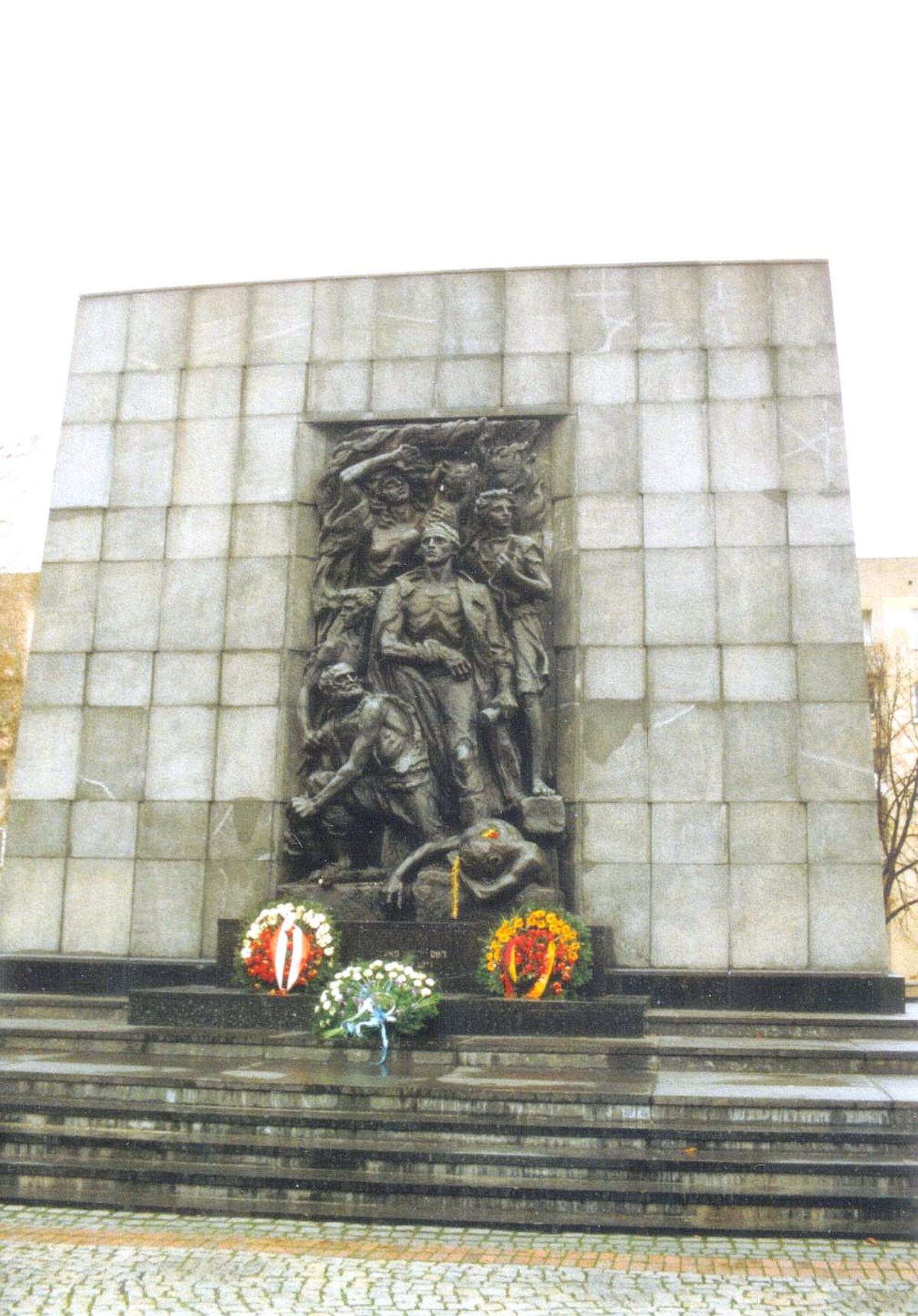
Why did a West German chancellor kneel in the Warsaw ghetto in 1970? And why did the Helsinki Accords of 1975 — an agreement that seemed to confirm Soviet control of Eastern Europe — eventually become one of the most powerful weapons used against that control?
- Why · 缓和为什么"从欧洲开始"?——因为欧洲是冷战最僵硬也最危险的切面:德国分裂、柏林悬案、奥德—尼斯河边界从未被承认。美苏可以在军控上谈,但欧洲的日常秩序需要欧洲人自己去松动
- What · 勃兰特做了什么?——Ostpolitik(东方政策):不推翻现状,而是先承认现实,再用接触改变现实——"Wandel durch Annäherung"(通过接近实现改变)
- So · 赫尔辛基 1975 到底是谁赢了?——短期看是苏联赢了(Basket I 承认战后边界与势力范围);长期看是西方赢了(Basket III 人权条款成了东欧异见运动的法律护身符)
- What next · 这一课通向哪里?——赫尔辛基的"人权条款"正是 1980s 东欧剧变(波兰团结工会、77 宪章)的伏笔,直接连到 Ch7-2
一、知识地图:欧洲这盘棋的"死结"在哪儿
二、背景链:为什么是 1969 年的西德要"向东伸手"?
- ① 1968 是一记警钟:两边都不稳——苏联入侵捷克斯洛伐克暴露东欧的脆弱;同期法国五月风暴的学生罢课几乎掀翻戴高乐。欧洲政治秩序东西两侧同时摇晃,坐在中间的西德最没有安全感
- ② 柏林墙把德国问题"冻"住了,但也"封"死了——1961 后家人被墙隔开、东德人出不来。西德发现,继续喊"不承认东德"只会让普通人永远见不到面
- ③ 美苏已经在谈军控,西德不想被"越过头顶"——如果美苏单独就欧洲秩序达成默契,西德的利益可能被牺牲。勃兰特要抢在前面,主动塑造议程
- ④ 勃兰特的个人经历——他本人是反纳粹流亡者(1933 年后流亡挪威、瑞典),对德意志民族的历史罪责有切身体认。他在华沙的下跪不是外交表演,而是"赎罪—和解"逻辑的自然延伸
- ⑤ 经济上有利可图——西德工业需要东欧市场与原材料,东欧则需要西德的技术与信贷。接触对双方都划算
- ⑥ 苏联为什么愿意谈?——莫斯科想要的是两件事:西方正式承认战后边界(等于承认东欧现状合法)+ 拿到西德的技术与贷款。勃兰特正好愿意用"承认"换"往来"
三、主线串讲:Ostpolitik 的条约网(1969–1973)
| 时间 | 条约 / 事件 | 内容 | 换来什么 |
|---|---|---|---|
| 1969.10 | 勃兰特出任西德总理(社民党 SPD 首次主政战后) | 提出"东方政策" | 欧洲缓和的政治引擎启动 |
| 1970.8.12 | 莫斯科条约(西德—苏联) | 双方放弃使用武力、承认欧洲现有边界(含奥德—尼斯河线与两德边界) | 西德获得与东欧国家建交的空间 |
| 1970.12.7 | 华沙条约(西德—波兰)+ 华沙下跪 | 正式承认奥德—尼斯河线为波兰西部边界 | 波德和解的象征性突破;勃兰特同年获诺贝尔和平奖(1971) |
| 1971.9.3 | 四大国柏林协定(美英法苏) | 确认西柏林与西德的通道畅通、西柏林不是西德一部分 | 柏林从"火药桶"变成"可管理的问题" |
| 1972.12.21 | 两德基础条约 | 互相承认为两个国家,发展"睦邻关系",互设常驻代表 | 家庭团聚、访问、贸易大幅增加;1973 两德同时入联合国 |
| 1973.7 | CSCE 赫尔辛基会议开幕 | 35 国开始谈"欧洲安全与合作" | 把双边缓和升级为全欧多边框架 |
四、深挖:赫尔辛基最后文件 1975——一场"各取所需"的交易
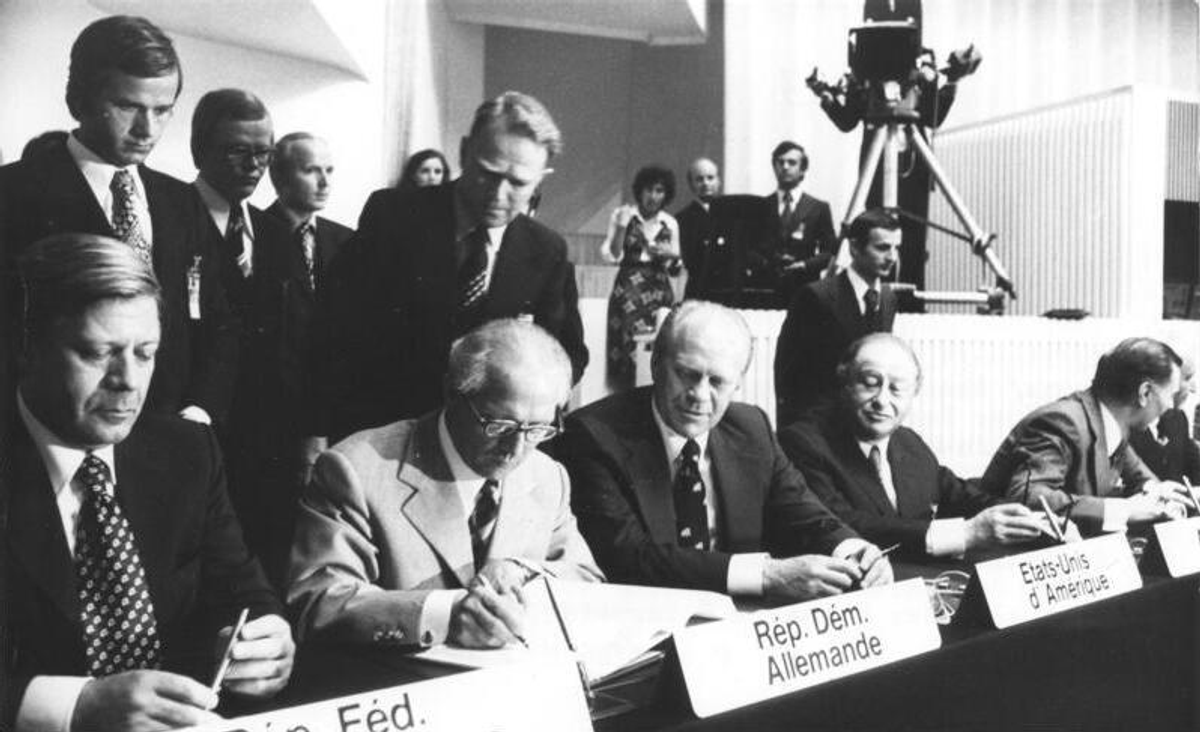
| 篮子 | 内容 | 谁想要 | 当时看起来谁赢了 |
|---|---|---|---|
| Basket I 安全与边界 | 十项原则,其中最关键:边界不可侵犯(inviolable),不得以武力改变;但原则中也写明边界可依国际法、以和平方式、经协议改变 | 苏联 | 苏联赢:等于拿到西方对东欧现状与东德的正式承认。美国右翼猛烈抨击(里根称之为承认"苏联对东欧的奴役") |
| Basket II 经济科技合作 | 贸易、工业合作、科技交流、环保 | 双方(东欧尤甚) | 双赢:东欧获得技术与信贷,西方获得市场与影响力 |
| Basket III 人权与人员流动 | 尊重人权与基本自由(言论、信仰、迁徙);促进人员接触、家庭团聚、信息自由流通;允许记者与文化交流 | 西方 | 当时看是"纸上条款";长期看是西方赢 |
"Basket one declared the borders of European countries to be 'inviolable'. By signing this agreement, all countries accepted the existence of the Soviet Bloc in Eastern Europe, including East Germany. This received a lot of criticism from the right wing in the USA, but it merely acknowledged the reality of the situation that had existed since the late 1940s."
—— 第一篮子宣布欧洲各国边界"不可侵犯"。签署即意味着各国接受了苏联集团在东欧的存在,包括东德。这在美国右翼招致大量批评,但它不过是承认了自 1940s 末以来就存在的现实。
— Steve Phillips, A World Divided
"Basket three… included an agreement to respect human rights, such as freedom of speech and freedom of movement across Europe. For the communist states of Eastern Europe to accept this was seen by the West as a significant step forward. Organisations were established to monitor governments and their actions against these principles."
—— 第三篮子包含尊重人权的承诺,如言论自由与在欧洲境内自由迁徙。东欧共产主义国家接受这一点,被西方视为重大进展。监督政府是否遵守这些原则的组织随之建立。
— Steve Phillips, A World Divided
怎么用:把这两段放在一起,就构成"**短期苏联赢、长期西方赢**"的完整论证。答题时一定要补上最后一步:赫尔辛基监督组织 → 77 宪章 → 团结工会 → 1989。能写出这条链条,就是 L5。
五、串线小结:中欧缓和到底成就了什么?
- 柏林通道得到保障,第三次柏林危机风险消除
- 两德之间探亲、电话、贸易成倍增长(1980 年西德人访东德超 800 万人次)
- 东欧获得西德技术、信贷与市场
- 把冷战从"军事对抗"部分转成"制度竞争"
- Basket III 的长尾效应:给了东欧异见者合法语言
- 正式承认了德国分裂与东欧现状——西德保守派(CDU)称之为"出卖"
- 勃兰特 1974 因间谍丑闻下台,改革动力受挫
- 苏联在人权条款上基本不履约(1970s 末加大了对异见者的打压)
- 美国国内批评:赫尔辛基让苏联"合法化"了帝国
- 没有改变一个事实:东欧人仍然不能自由离开
The one-sentence takeaway: Ostpolitik traded recognition for contact — it accepted the map of Cold War Europe in order to make life better for the people trapped inside it, and in doing so planted the legal seeds of that map's eventual destruction.
六、课后真题训练
📄 题目原文(教材 Unit 7 p159 改编)
'The Helsinki Accords of 1975 were a victory for the Soviet Union rather than for the West.' How far do you agree with this view?
You may use the following in your answer and any other relevant examples:
• Basket One (the inviolability of frontiers)
• Basket Three (human rights and freedom of movement)
• the impact of the Accords on dissident groups in Eastern Europe
• criticism of the Accords in the USA
中文意译:「1975 年的赫尔辛基协定是苏联的胜利,而不是西方的胜利。」你在多大程度上同意?
📊 Mark Scheme(Section B 通用档位 + 本题可用论点)
| 档位 | 分数 | 特征 |
|---|---|---|
| L1 | 1–4 | Simple or generalised statements; judgement missing or asserted |
| L2 | 5–8 | Descriptive passages; criteria for judgement left implicit |
| L3 | 9–14 | Attempt to explain links between key features; weak substantiation |
| L4 | 15–20 | Analysis of the relationships between key features; supported judgement |
| L5 | 21–25 | Sustained analysis and discussion; relative significance evaluated |
Indicative content(建议论点)
- 支持"苏联赢":Basket I 宣布欧洲边界"不可侵犯",等于让西方正式承认东欧集团、东德与战后边界——这正是苏联 1954 年以来一直追求而没拿到的合法性;美国右翼(里根 1976 党内初选抨击福特)认为这是"承认奴役";勃列日涅夫在国内可宣称和平共处取得成果
- 支持"西方赢":Basket III 要求尊重人权、言论与迁徙自由,西方随即建立监督组织;莫斯科赫尔辛基观察组(1976)、77 宪章(1977)、波兰 KOR 与后来的团结工会,都以"本国政府已签字承诺"为合法性来源;Basket I 同时写入"边界可经和平协议改变",为 1990 年德国统一埋下法理依据
- 评价"胜负"要看时间尺度(升档关键):短期(1975–79)苏联获得它最想要的东西,且基本不履行人权条款;长期(1980s)Basket III 成为东欧异见运动的护身符,反而侵蚀了苏联帝国的合法性。答题时明确区分 short-term / long-term,是 L4→L5 的分水岭
- 补充语境:赫尔辛基是 CSCE(35 国)而非美苏双边协议,中立国与西欧小国在其中的作用不可忽视;它也是 Ostpolitik(莫斯科条约 1970、华沙条约 1970、两德基础条约 1972)逻辑的多边延伸
💡 中文思路(怎么搭这篇文章)
- 引言先拆"胜利"这个词:胜利要看时间尺度(短期 vs 长期)与领域(领土合法性 vs 人权话语权)。先把尺子亮出来
- 第一段:为什么短期看是苏联赢——Basket I 的"inviolable",苏联 1954 年起就想要的东西终于拿到;美国右翼的抨击(福特被里根在 1976 初选中攻击"出卖东欧")证明当时西方自己也这么认为
- 第二段:为什么西方也不算输——Basket III——人权、言论、迁徙、家庭团聚、信息自由;关键不是条文,而是它被东欧社会用起来了
- 第三段:转折——异见运动怎么用它——1976 莫斯科赫尔辛基观察组、1977 捷克 77 宪章(哈维尔)、波兰 KOR → 团结工会。要点出"**苏联自己签的字,成了被告的证据**",这是本题最锋利的一句
- 第四段:限定与反证——1970s 末苏联加大打压异见者(萨哈罗夫 1980 被流放高尔基市),说明条文本身不能约束强权;真正起作用的是信息流通与西方舆论
- 结论:短期苏联赢(领土合法性),长期西方赢(话语权与合法性侵蚀)。赫尔辛基的特殊之处在于——它是一个双方都以为自己在利用对方的协议
✍️ 英文 EXEMPLAR(示范答案)
Whether the Helsinki Accords of August 1975 were a Soviet or a Western victory depends on the timescale one applies. In the short term, the Soviet Union obtained something it had sought since the 1950s: formal Western recognition of the territorial settlement in Eastern Europe. In the longer term, however, the Accords supplied the language and the legal leverage with which Eastern European dissenters would dismantle that settlement's legitimacy. The Accords were, in that sense, an agreement that each side believed it was using against the other.
The Soviet gains were real and immediate. Basket One declared the frontiers of European states 'inviolable', which meant that all thirty-five signatories — including the United States — accepted the existence of the Soviet Bloc and of East Germany. Since 1954 Moscow had pressed for a European security conference whose principal purpose was precisely this recognition; its willingness to negotiate for two and a half years suggests how much it valued the outcome. The criticism in the United States confirms the point: Ronald Reagan attacked the Accords during the 1976 Republican primaries, arguing that President Ford had legitimised Soviet domination of Eastern Europe, and the charge was politically damaging. Brezhnev, meanwhile, could present the Final Act to the Politburo as proof that peaceful coexistence delivered concrete results.
Yet the West did not sign merely to be generous. Basket Three committed all signatories to respect human rights and fundamental freedoms, including freedom of thought, speech and movement, and to encourage family contacts, freer travel and the circulation of information. Western negotiators understood that these provisions were unlikely to be honoured immediately; their value lay in creating a standard against which communist governments could be measured. Crucially, organisations were established to monitor compliance, and dissidents inside the Eastern Bloc seized on the text. The Moscow Helsinki Group was founded in 1976, Charter 77 in Czechoslovakia followed in 1977, and Polish activists employed the same language in the movement that became Solidarity. Each of these groups behaved less like opponents of the state than like citizens holding their own government to a promise it had signed in public.
This long-term effect should not be exaggerated, and a balanced answer must acknowledge the limits. The Soviet authorities did not liberalise; they repressed, exiling Sakharov to Gorky in 1980 and intensifying pressure on Helsinki monitors. The provisions of Basket Three had no enforcement mechanism, and in the late 1970s they appeared to have achieved very little. What made them consequential was not legal force but publicity: the Accords made human rights a permanent, legitimate item on the East–West agenda, and made it far harder for Soviet-bloc governments to claim that their internal treatment of their citizens was nobody else's business. It is also worth noting that Basket One's principle of inviolability was qualified — frontiers could still be changed peacefully, by agreement and in accordance with international law — a reservation that would matter a great deal in 1990.
In conclusion, the Helsinki Accords were a Soviet victory in the terms that the Soviet Union understood and valued: territory, recognition and legitimacy. They proved, however, to be a Western victory in the terms that ultimately mattered more: the power to define what legitimate government meant. That the same document could serve both purposes is the clearest illustration of what Détente was — not the end of the struggle, but a phase in which the struggle was conducted with different weapons.
示范要点批注:① 引言用时间尺度(short term / longer term)建立判断框架,避免一刀切;② 用里根 1976 初选抨击福特这个细节,证明"当时西方自己都觉得输了",说服力远强于空谈;③ 把异见运动写成"公民拿着政府公开签过的承诺追责",这是最锋利的表述;④ 主动承认 Basket III 的局限(无强制力、1970s 看似无效),让答案更可信;⑤ 结尾点出 inviolability 的"和平变更"保留条款,展示细节掌握。
✅ 自检清单(交卷前逐条打勾)
- □ 引言是否区分了短期 / 长期两种"胜利"
- □ 是否写清三个篮子各自的主张方(I=苏联、III=西方)
- □ 是否点出 35 国与 CSCE 的多边性质(不是美苏双边条约)
- □ 是否把赫尔辛基与 Ostpolitik / 两德基础条约联系起来
- □ 是否具体提到异见组织(莫斯科赫尔辛基观察组 1976、77 宪章 1977、团结工会)
- □ 是否承认 Basket III 的局限(无强制力、1970s 打压加剧)
- □ 是否提到"inviolable ≠ permanent"这个精确保留条款
- □ 结论是否给出分层判断而非一句话站队
七、拓展阅读与思考
- 一手材料:《赫尔辛基最后文件》Basket I 的"十项原则"与 Basket III 全文——读原文你会发现,人权条款写得相当具体(连家庭团聚、广播收听都写了)
- 对照阅读:勃兰特 1970 华沙条约签署时的声明 vs 基督教民主联盟(CDU)的批评——能帮你理解"承认现实"在道德上有多难
- 思考题:如果一个国家签了人权条款却完全不履行,这个条款还有价值吗?把你的答案套用到 1989 年——赫尔辛基的条款在 1975 年是"废纸",在 1989 年是"武器",中间发生了什么?
- 延伸线索(Ch7-2 预告):77 宪章的哈维尔在 1989 年成为捷克斯洛伐克总统;莫斯科赫尔辛基观察组成员后来成为俄罗斯人权运动的中坚。赫尔辛基的账单在 14 年后才兑现。