Ch2-5 · 北约成立 1949:从布鲁塞尔条约到两极军事同盟
Superpower Relations and the Cold War, 1944–90 — Unit 2: Development of the Cold War 1945–49
第 5 / 5 讲 1949.4 华盛顿条约 教材 Steve Phillips《A World Divided》Ch2一、先搞懂这几个词
北约 NATO
布鲁塞尔条约 1948 Brussels Treaty
华盛顿条约 1949 North Atlantic Treaty
第五条 Article 5
孤立主义 Isolationism
西德 / 东德 FRG / GDR
二、背景链:为什么西方要结盟?
读这条链要抓因果:北约不是凭空冒出来的,它是柏林封锁"吓"出来的结果——西欧(尤其法国)确信单靠本国无力御苏,必须与美国绑定。记住:封锁 → 西方恐慌 → 北约成立 → 两极军事同盟定型。
三、地图:北约与华约的对峙(1949–1990)
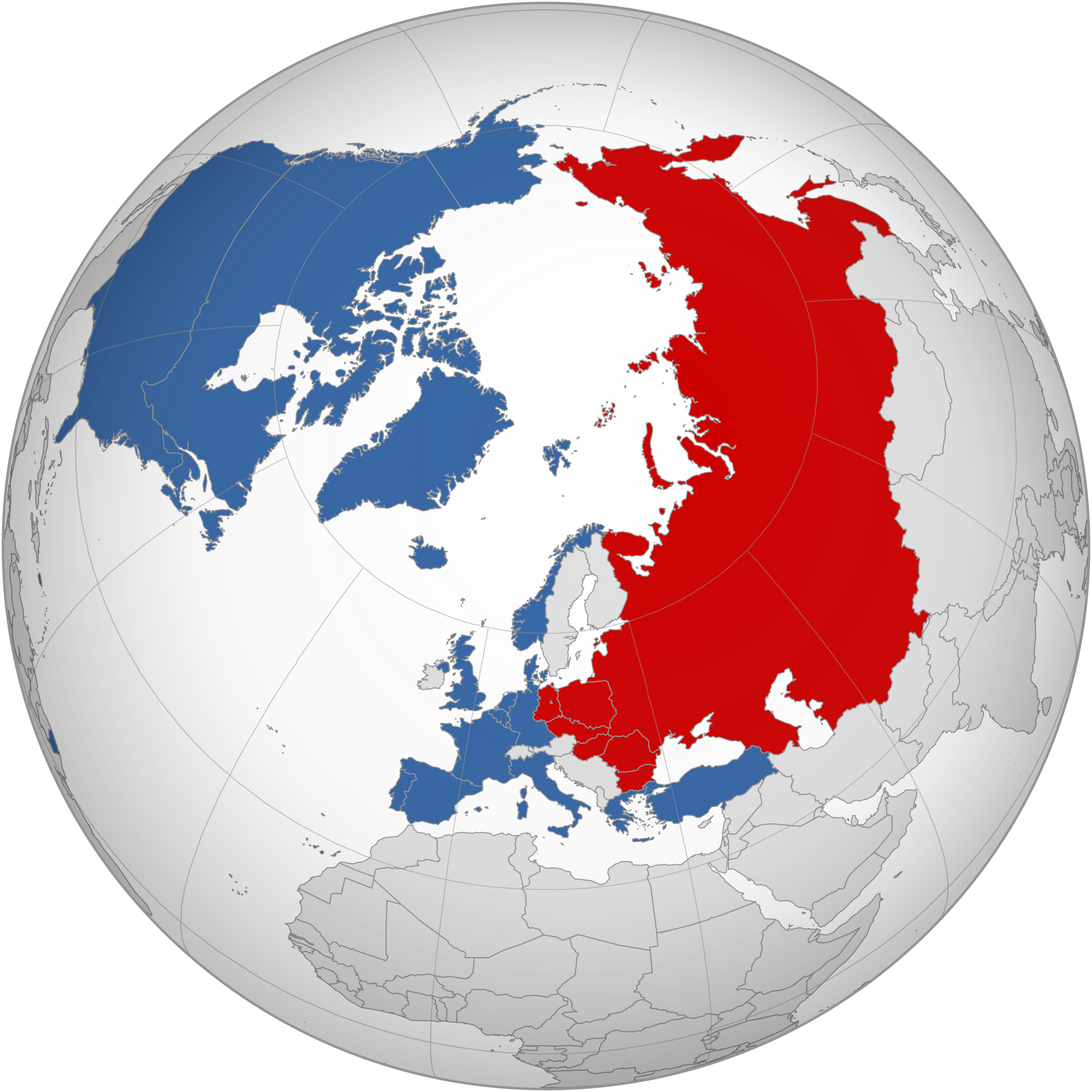
蓝色为北约(NATO)、红色为华约(Warsaw Pact)。北约 1949 年从 12 个创始国起步,此后不断扩张;华约 1955 年成立形成对称对峙。图源 Wikimedia Commons(Discombobulates, CC BY-SA 4.0)。
读图要点
- 起点(1949):北约最初是北美 + 西欧(含布鲁塞尔五国及意大利、葡萄牙、北欧三国、冰岛),把美国"拉进"了欧洲防务。
- 对称对峙(1955 起):苏联以华约回应,欧洲被两道军事同盟线整齐切分,这就是"两极(bipolarity)"的地理写照。
- 扩张即信号:北约后来吸收西德(1955)、希腊土耳其等,每一次扩张都加剧对抗——下一章 Ch3-4 会讲华约与西德重武。
四、北约成立详解
从哪里来:布鲁塞尔条约的"扩大"
教材明确说北约是布鲁塞尔条约(1948)的扩大(enlargement)。布鲁塞尔五国(英、法、比、荷、卢)先抱团,再拉进美国、加拿大及意大利、葡萄牙、挪威、丹麦、冰岛,组成覆盖北大西洋的联防体系。
注意:北约不是马歇尔计划的"军事版"。马歇尔计划是经济援助,北约是军事同盟;两者先后出现、互相支撑,但性质不同。
核心意义:美国放弃孤立主义
北约最大的历史意义在于——它让美国在和平时期就与欧洲结成军事同盟,等于明明白白告诉苏联:美国不会退回孤立主义了。
其指导原则是第五条:对一国的攻击即对所有成员国的攻击。为此还设立了统一司令部协调防御。它是保护西方及其利益的防御性组织。
1949 年北约 12 个创始成员国
| 美洲 | 美国 🇺🇸、加拿大 🇨🇦 |
|---|---|
| 西欧核心(布鲁塞尔五国) | 英国 🇬🇧、法国 🇫🇷、比利时 🇧🇪、荷兰 🇳🇱、卢森堡 🇱🇺 |
| 南欧 | 意大利 🇮🇹、葡萄牙 🇵🇹 |
| 北欧 | 挪威 🇳🇴、丹麦 🇩🇰、冰岛 🇮🇸 |
西德(FRG)当时尚不存在,1955 年才加入北约——这又刺激苏联成立华约,形成闭环(见 Ch3-4)。
五、苏联的反应与德国正式分裂
斯大林:北约是"蓄意挑衅"
斯大林把北约的成立视为蓄意挑衅(deliberately provocative)。但他也并非毫无反制筹码——就在 1949 年 8 月,苏联爆炸了第一颗原子弹,比西方预期的更早,打破了美国的核垄断,增强了苏联的战略能力。
讽刺的是:柏林危机和北约的成立,恰恰把冷战的主动权从苏联手里夺走了——西方借危机完成了整合,苏联反而被迫面对一个被美国军事绑定的西欧。
德国:从"临时分裂"到"永久分裂"
柏林危机的另一后果,是东西德统一的希望彻底破灭。雅尔塔-波茨坦约定的"临时分区"变成了长期现实:
- 1949 年 8 月:西方三占区合并为联邦德国(西德,FRG);
- 1949 年 10 月:苏占区成为民主德国(东德,GDR)。
资本主义在西德生根,共产主义被强加于东德——这一分,持续了整整 40 年。
六、课堂史料(Source A & B)
北约的意义在于,它让美国在和平时期卷入军事同盟,从而向苏联表明:美国不会再回到孤立主义。北约的指导原则是"对任一成员国的攻击即视为对全体之攻击"。为此设立统一司令部协调各成员防御,因此它是一个保护西方及其利益的防御性组织。斯大林将北约的创建视为蓄意挑衅,但他也通过打破美国核垄断增强了苏联能力——1949 年 8 月苏联爆炸了第一颗原子弹,早于西方预期。
① 用本段一句话说明:为什么北约的成立意味着"孤立主义的终结"? ② 斯大林对北约持什么态度?他靠什么"反制"了北约带来的劣势?"The Marshall Plan also encouraged the formulation of new European security plans that would lead directly to the formation of the North Atlantic Treaty Organisation (NATO). NATO also developed from the shared belief that the Western economic region … would be strengthened by the existence of a mutual defence pact alongside it. NATO was an expression of transatlantic solidarity, a pact between the United States and Western Europe that reinforced a common set of values and governing principles."
① Hitchcock 认为马歇尔计划与北约是什么关系?用原文词作答。 ② 这段材料如何支撑"北约是美欧价值观同盟"这一论点?(提示:transatlantic solidarity / common values)📋 参考答案(先自己写,再展开)
Source A:① 因为北约使美国"在和平时期"与欧洲结军事同盟,打破了美国战后可能退回孤立主义的预期。② 斯大林视其为"蓄意挑衅(deliberately provocative)";他的反制是 1949.8 苏联首颗原子弹,打破美国核垄断。
Source B:① "lead directly to"(马歇尔计划直接催生北约);两者是经济援助→安全同盟的递进关系。② 原文称北约是"transatlantic solidarity(跨大西洋团结)"、美欧间"reinforced a common set of values and governing principles(强化共同价值观与治理原则)"的 pact,直接支撑"价值观同盟"论点。
📋 SKILLS BUILDER:两则史料综合训练(来自教材原题思路)
- 用 不超过 5 个词,概括 Source A、B 对"北约性质"的判断(防御性 / 价值观同盟)。
- 你会从 Source B 引用哪句话来支撑"经济援助催生军事同盟"这一因果链?
- 两则史料一致的一点是什么?(提示:都承认北约让美国 permanent 留在欧洲)
- 两则史料分歧/侧重的一点是什么?(提示:A 强调苏联视角的"挑衅",B 强调美欧视角的"团结")
七、📖 拓展阅读
北约的"三重功能":美国人留、俄国人挡、德国人压
冷战史常用一句玩笑概括北约成立的三重目的:keep the Americans in(把美国留在欧洲,防止其退回孤立主义)、keep the Russians out(把苏联挡在东边)、keep the Germans down(压制西德重新武装的隐患)。前两点是公开宣示,第三点(约束德国)是西欧(尤其法国)的隐忧——这也解释了为何法国后来对德国入约又爱又怕。
美国为何甘愿放弃孤立主义?
一战后美国长期"不结军事同盟",但 1945 年后局面变了:苏联扩张、东欧易帜、原子弹时代让"大洋屏障"失效。杜鲁门主义已表明美国接手全球反共领导权;北约是把这一承诺用军事条约钉死。对美国人来说,与其等苏联打过来再参战,不如现在就"集体防御"把战线顶在欧洲。
苏联 1949.8 原子弹的连锁反应
苏联首颗原子弹比美国预估的"1952 前后"早了约三年。它瞬间打破了美国核垄断,迫使美国重新评估战略——既加速了北约一体化(西方更需要抱团),也埋下后来核军备竞赛与"相互保证毁灭(MAD)"的伏笔。对斯大林而言,这是他"反制北约劣势"的关键筹码。
华约 1955:对称的回应(下一章 Ch3-4 详讲)
北约成立后,苏联一直缺乏对等军事架构;直到 1955 年西德加入北约,苏联才成立华沙条约组织(Warsaw Pact),把东欧卫星国绑进自己的军事同盟。至此,欧洲被两道同盟线整齐切分,两极军事格局完全定型——这也是 Ch2 与 Ch3 之间的关键衔接。
⚠️ 考试易错提醒
- 时间顺序别乱:布鲁塞尔条约 1948 → 北约签约 1949.4 → 苏联原子弹 1949.8 → 西德 1949.9 / 东德 1949.10。别把"北约(4月)"和"西德(9月)"的前后搞反。
- 北约是"防御性"但苏联视"挑衅"——两种视角都要写:Level 5 答案不能只写"西方正义",必须呈现斯大林"蓄意挑衅"的叙事(教材原文用词),再判断责任归属。Source A/B 就是给你写平衡论证的弹药。
- 北约 ≠ 马歇尔计划的军事版:马歇尔计划是经济援助(1948),北约是军事同盟(1949);前者催生后者的"安全计划",但两者性质不同,混为一谈会丢分。
八、真题四件套(史料分析 + Essay)
📝 题目(Edexcel 真题 · 202301 Section A)
How far do you agree with the view that Churchill's Iron Curtain speech had the most significant impact on the development of the Cold War in the years 1946–49? Explain your answer using Extracts 1 and 2 and your knowledge of the issues related to this controversy. (25)
本课提示:这道题虽以"铁幕演说"为设问,但 Extract 2 直接讲马歇尔计划如何催生 NATO——正好让你练"把北约纳入 1946–49 冷战发展脉络"的论证,也是本课核心。答题时可把 NATO 作为"冷战军事化"的关键支点之一。
📄 Extracts(史料原文)
Extract 1 — P. White, Churchill's Cold War: How the Iron Curtain Speech Shaped the Post-War World (2013): argues that Churchill's 1946 Fulton speech crystallised the image of a divided continent — a "democratic capitalist West" versus a "communist East" — and supplied the rhetorical framing within which both the Truman Doctrine and the Marshall Plan were later understood.
Extract 2 — W. J. Hitchcock, The Marshall Plan and the creation of the West (2011): "The Marshall Plan also encouraged the formulation of new European security plans that would lead directly to the formation of the North Atlantic Treaty Organisation (NATO). NATO also developed from the shared belief that the Western economic region … would be strengthened by the existence of a mutual defence pact alongside it. NATO was an expression of transatlantic solidarity, a pact between the United States and Western Europe that reinforced a common set of values and governing principles."
✅ Mark Scheme 要点(indicative content)
- 马歇尔计划催生北约:NATO 是"dual platform to strengthen and defend the economic and ideological values underpinning western values"——经济援助与安全同盟是同一套西方价值的双支柱。
- 苏联行动逼出集体防御:1947–48 苏联在东欧的举动,使英美更聚焦 collective defence;北约条约虽未点名,但"envisaged Russia as its major threat"。
- 早期冷战链条:Cominform → 柏林危机 → 西德建立 → NATO alliance;其他发展含杜鲁门主义、柏林封锁、捷克危机等。
- 与铁幕演说的关联:"The North Atlantic Treaty of April 1949 had a direct link to Churchill's appeal to the US and western European nations to maintain solidarity."(呼应 Q1 论点)
🧭 中文思路(答题框架)
第一步·表态:适度同意"铁幕演说影响重大",但要限定——它更多是修辞框架/心理铺垫,真正把冷战"制度化、军事化"的是后续连锁事件(杜鲁门主义、马歇尔计划、北约)。
第二步·论证 A(支持"铁幕演说重要"):用 Extract 1,铁幕演说把"民主西方 vs 共产主义东方"的分裂意象固定下来,为杜鲁门主义、马歇尔计划提供话语框架;且 Mark Scheme 指出 1949 北约与邱吉尔"维持西方团结"的呼吁直接相连。
第三步·论证 B(平衡:北约等才是"硬"转折):用 Extract 2,马歇尔计划"直接催生"北约,而北约是美国军事介入欧洲的质变点;没有北约,冷战仍是经济/政治对抗,有了北约才成军事同盟对峙。这才是 1946–49 最具"结构性"的影响。
第四步·自身知识:补 Cominform(1947)→柏林危机(1948–49)→西德(1949.9)→北约(1949.4)→苏联原子弹(1949.8)→东德(1949.10),展示时序与因果,点出"演说≠行动"。
第五步·结论:铁幕演说塑造了认知与话语,但 1946–49 冷战"最显著的发展"更应归功于一连串制度性行动(尤其北约),演说是引线而非炸药。
📝 EXEMPLAR(英文范文 · ~1200 词)
How far do you agree with the view that Churchill's Iron Curtain speech had the most significant impact on the development of the Cold War in the years 1946–49?
Churchill's Iron Curtain speech at Fulton in March 1946 is often remembered as the opening salvo of the Cold War, and there is no doubt that it shaped how the conflict was understood in the West. I partly agree that the speech had the most significant impact on the development of the Cold War between 1946 and 1949, because it provided the rhetorical and conceptual framework within which later policies were framed. However, this essay will argue that the speech's influence was primarily discursive rather than institutional: the truly decisive developments of these years — above all the Marshall Plan, the Berlin crisis, and the creation of NATO — were concrete actions that structurally divided Europe, whereas Churchill's words supplied the language for describing a division that was already emerging.
Extract 1 supports the view that the speech was highly significant by showing how it "crystallised the image of a divided continent." According to White, Churchill's Fulton address fixed the mental map of a "democratic capitalist West" versus a "communist East," and this binary became the framing through which both the Truman Doctrine and the Marshall Plan were subsequently understood. This is historically important: prior to 1946 the wartime Grand Alliance had not yet been publicly buried, and many in the West still hoped for postwar cooperation with the Soviet Union. Churchill's speech — delivered by a respected wartime leader though he was out of office — legitimised open talk of rivalry and gave Western policy-makers a vocabulary for anti-Soviet resistance. In this sense the speech did have a "most significant" cultural and psychological impact: it made the Cold War thinkable for Western publics.
Yet to call the speech the most significant development risks overstating its causal weight, because the speech itself changed no borders, created no alliances, and moved no troops. The harder, structural turning points came from policies and events that followed. Extract 2 reveals the deeper mechanism: Hitchcock argues that "the Marshall Plan also encouraged the formulation of new European security plans that would lead directly to the formation of the North Atlantic Treaty Organisation (NATO)." In other words, economic aid (1948) spawned a military alliance (1949) — a "dual platform to strengthen and defend the economic and ideological values underpinning western values," in the words of the mark scheme. NATO was the moment the United States abandoned its traditional postwar isolationism and committed, for the first time in peace, to the defence of Western Europe. That was a transformation of the international system far more consequential than any single speech.
Own knowledge confirms that the chain of institutional developments in 1947–49 dwarfed the speech in practical effect. The Cominform (1947) let Moscow coordinate and tighten control over Eastern European communist parties. The Truman Doctrine (1947) pledged direct American support against "armed minorities" and external pressure. The Berlin crisis of 1948–49 — triggered by the Western introduction of a new currency and answered by Stalin's blockade — turned abstract rivalry into a live confrontation and, as the mark scheme notes, fed directly into the founding of a West German state and the NATO alliance. When the Federal Republic was proclaimed in September 1949 and the North Atlantic Treaty was signed in April that year, the division of Europe was no longer a speechwriter's metaphor but a ratified reality, complete with competing military blocs. Stalin, for his part, viewed NATO as "a deliberately provocative action" (Phillips) and responded by breaking the American nuclear monopoly with his own atomic test in August 1949 — further entrenching bipolarity.
It is also worth noting that the mark scheme explicitly links NATO back to Churchill, observing that "the North Atlantic Treaty of April 1949 had a direct link to Churchill's appeal to the US and western European nations to maintain solidarity." This suggests examiners do see the speech as a seed of later unity. But "a direct link" is not the same as "the most significant impact": Churchill urged solidarity; the Americans and Europeans built the institutions. The speech was the appeal, not the architecture. A balanced answer must credit Churchill with articulating the Western cause, while recognising that the 1946–49 trajectory was driven by Soviet-American actions on the ground — the Czech coup, the blockade, the marshalling of economic and military blocs — rather than by oratory alone.
In conclusion, I agree that Churchill's Iron Curtain speech was a significant milestone in the development of the Cold War between 1946 and 1949, chiefly because it named and normalised the East-West divide in Western consciousness and supplied the framing for subsequent policies. However, I disagree that it had the most significant impact. The decisive developments of these years were institutional and militarising: the Marshall Plan's economic integration, the Berlin crisis's confrontation, and above all NATO's conversion of the Cold War from a political-economic struggle into a permanent military alliance system binding the United States to Europe. Churchill's speech lit the fuse of perception; the actions of 1947–49 built the bomb. Any full answer must weigh the speech's undoubted rhetorical power against the harder structural realities it helped describe but did not itself create.