Ch6-4 · 综合:1979–85——谁更该为重启的冷战对抗负责?
Superpower Relations and the Cold War, 1944–90 — Unit 6: The "Second" Cold War 1979–85
第 4 / 4 讲 真题 202606 Sec B Q3 美苏双向归因 苏联入侵·里根军备·SDI KAL 007·老人政治 论点平衡训练 L1–L5 档位自评 教材《A World Divided》Ch7/Ch8① 四步主线 · 这一讲你要抓住什么
- 真题定位:202606 Sec B Q3 —— "How accurate is it to say that it was the USA that was more responsible for the renewed Cold War confrontation with the USSR in the years 1979–85?"(25 分)
- 核心训练:这是一道双向归因题——不能只骂美国,也不能只骂苏联,要两边都评估再下判断。
- 本讲整合:把 Ch6-1/2/3 的因果链收拢——阿富汗、里根军备、SDI、KAL 007、老人政治。
- 判分关键:L4–L5 要求"分析 + 评估"双向论点,并给出有论据支撑的"程度判断"。
知识地图 · 先认脸
renewed Cold War confrontation
指 1979–85 缓和彻底破裂后,美苏对抗重回"全面敌对"状态——军备竞赛、第三世界代理战争、 rhetoric 对抗。"USA more responsible" 论点
主张美国更该负责:里根军备扩张、SDI 破坏稳定、里根主义全球反苏、欧洲导弹部署、Evil Empire 修辞。"USSR more responsible" 论点
主张苏联更该负责:阿富汗入侵是催化剂、第三世界扩张、老人政治导致对抗性 rhetoric、部署 SS-20、KAL 007 挑衅。Level 1–5 档位
L1 1–4(笼统)/ L2 5–8(单面有论据)/ L3 9–14(两面但浅)/ L4 15–20(两面分析+评估)/ L5 21–25(深度分析+有分量判断)。程度副词
考试高分靠它:partly / largely / to a limited extent / more accurate to say... 避免绝对词。真实地图 · 欧洲导弹对峙(北约 double-track decision)
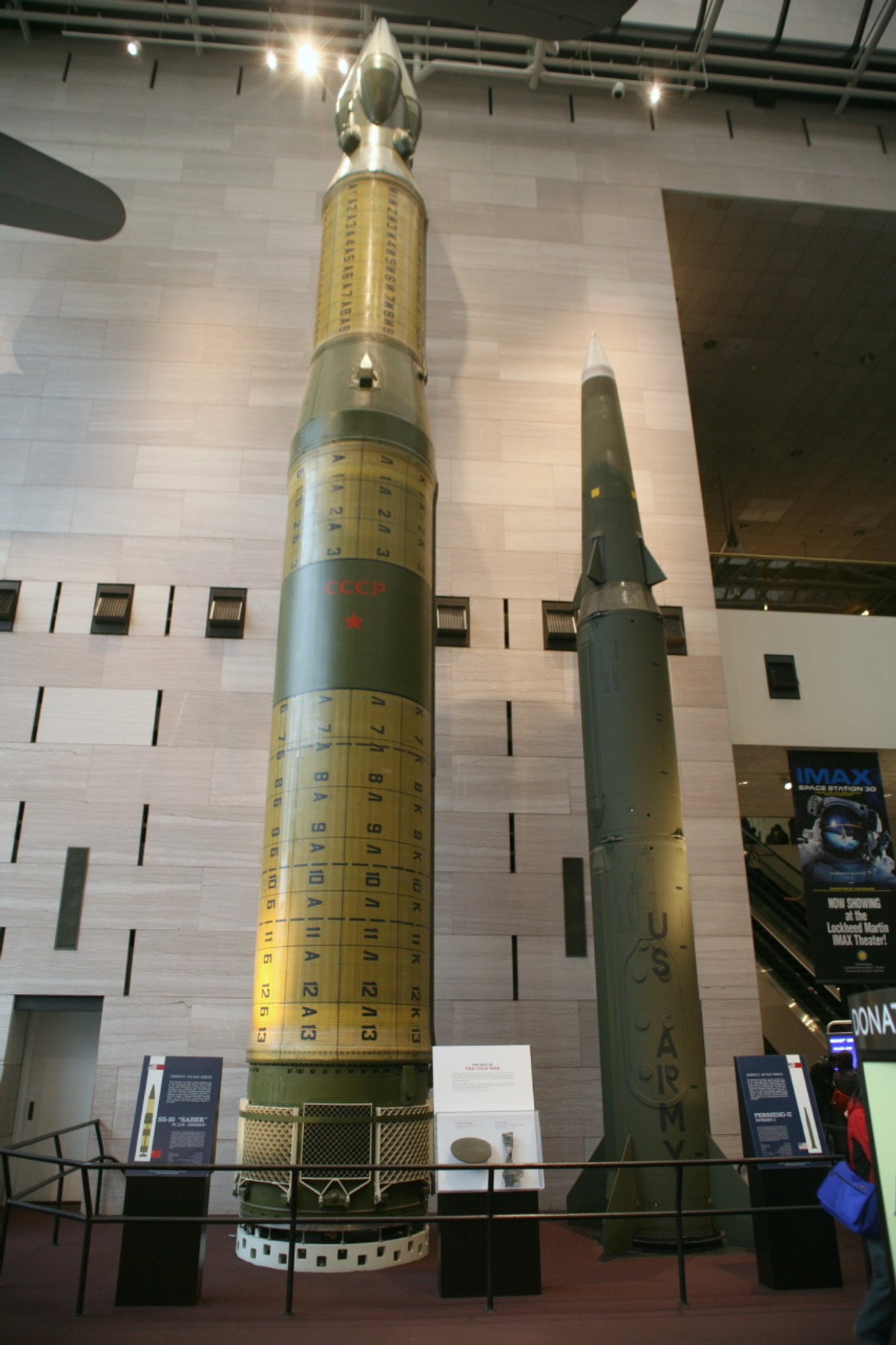
1979 北约"双轨决议":一边与苏联谈判削减 SS-20,一边在西欧部署 Pershing II / 巡航导弹——对抗升级的关键一环。
背景链 · 1979–85 对抗重启的"因果地图"(竖向)
- 1. 苏联侧的"硬动作":1979.12 阿富汗入侵(催化剂)、第三世界扩张(安哥拉/埃塞)、SS-20 部署、KAL 007(1983)挑衅性反应。
- 2. 苏联侧的"软瘫":1979–85 三任病弱领袖(勃列日涅夫→安德罗波夫→契尔年科),决策瘫痪、对外只剩惯性对抗。
- 3. 美国侧的"硬动作":里根 1981 上任、军费 +13%、SDI(1983)、里根主义、欧洲导弹、Evil Empire。
- 4. 美国侧的"软转":1985 戈尔巴乔夫上台后,里根其实转向外交(日内瓦/雷克雅未克/华盛顿峰会)——说明对抗非里根"本性难移"。
主线串讲 · 双向论点对照表(答题骨架)
| 论点方向 | 可用证据 | 教材/真题出处 |
|---|---|---|
| 美国更负责 | 里根军备史无前例增长;SDI 破坏 MAD 威慑;里根主义全球反共;欧洲 Pershing/巡航导弹部署;Evil Empire 把对抗道德化 | 教材 Ch8(SDI Sources F/H);真题 MS" Reagan's presidency less confrontational than expected" 反证里根并非最对抗 |
| 苏联更负责 | 阿富汗是催化剂且军事行动持续升温;领导人更替暴露"对抗性修辞";东欧卫星国不稳(波兰)促其强硬;SS-20 战场核武部署;KAL 007 加剧紧张 | 真题 MS 明确列出这 6 条苏联责任点 |
| 结构/第三方因素 | 1979–85 全球经济挑战、海湾动荡、民族主义——对抗有"时代土壤",非单国故意 | 真题 MS 末条"Other relevant material must be credited" |
📖 真题题干(202606 Sec B Q3)
"How accurate is it to say that it was the USA that was more responsible for the renewed Cold War confrontation with the USSR in the years 1979–85?"
⚠️ 题目问的是"美国更负责"——你必须评估这个说法的准确性,而不是写"冷战为什么重启"。
📖 Mark Scheme 双向要点(摘录)
苏联责任:阿富汗是催化剂 + 军事行动持续升温;苏联领导层内斗不稳促对抗性修辞;东欧(尤其波兰)不稳使其更对抗;部署新战场核武器;1983 击落韩国民航机加剧紧张。
美国非主因:里根其实"比预期更少对抗",1985 戈尔巴乔夫上台后他愿外交——说明对抗非美国单方面造成。
深挖 · 怎么写出 L5 的判断?
低分答案:一边倒骂美国(或骂苏联)。高分答案的结构:
- 承认题干有道理:里根的军备 + SDI 确实急剧升高了对抗强度,尤其是 1983 年。
- 但立刻转折:苏联的阿富汗入侵(1979,早于里根上任)才是"催化剂",且苏联自身扩张/老人政治是深层根因。
- 再补一层:1985 后里根转向外交,证明对抗是"结构性"而非"里根个人好战"。
- 最终判断(带程度副词):"It is partly accurate to blame the USA, but the renewal of confrontation rested primarily on pre-existing Soviet actions and structural tensions; the USA intensified rather than initiated it."
⚠️ 易错:① 漏答苏联责任(题干是"美国更负责",但 MS 明确要求两边都评);② 把 SDI 写成"建成了"(实际未部署);③ 不给出"程度判断"只罗列事实 → 卡在 L3。
课后真题四件套 · Ch6-4(真题原装)
① 题目(202606 Sec B Q3 · 原题)
How accurate is it to say that it was the USA that was more responsible for the renewed Cold War confrontation with the USSR in the years 1979–85?
25 分 · Section B(分析 + 评估 + 判断)· 需结合本单元知识与前述 Extracts。
② Mark Scheme 要点(官方 Indicative Content)
- 苏联责任:① 阿富汗入侵是催化剂,军事行动持续升温 Gulf 紧张;② 苏联领导层内斗不稳促其展现对抗性修辞;③ 东欧卫星国(尤其波兰)不稳使其更对抗;④ 部署新型战场核武器显著挑衅欧洲;⑤ 1983 击落韩国民航机(有美国议员在机)加剧紧张。
- 美国非主因:⑥ 里根其实"比预期更少对抗",1985 戈尔巴乔夫上台后他显得愿外交。
- 结构因素:1979–85 经济挑战、海湾不稳、民族主义等为对抗奠基;其他相关材料均给分。
③ 中文思路
第一段:先表态——"部分准确,但非主因"。第二段:美国责任(里根军备/SDI/里根主义/欧洲导弹),承认题干有道理。第三段:苏联责任(阿富汗 1979 早于里根、第三世界扩张、SS-20、KAL 007、老人政治),这是更深根因。第四段:结构因素 + 1985 后里根转向外交,证明对抗非美国单方面。结尾:程度判断——美国"加剧"而非"发动"对抗。
④ 英文 EXEMPLAR(约 520 词 · L5 水准)
It is partly accurate to hold the USA primarily responsible for the renewed Cold War confrontation of 1979–85, but the assertion overstates American agency: the breakdown rested at least as heavily on Soviet actions and on structural tensions that predated Reagan's presidency.
There is ground for the claim. Ronald Reagan entered office in 1981 with a strident anti-communist rhetoric and secured unprecedented defence increases — 13 per cent in 1982 alone. The Strategic Defense Initiative (1983), by threatening to escape the logic of Mutually Assured Destruction, was viewed even by Western analysts as destabilising, and the Reagan Doctrine extended aid to anti-communist insurgents worldwide. The deployment of Pershing II and cruise missiles in Western Europe, paired with the "Evil Empire" speech, raised the temperature of the confrontation and, alongside the Soviet downing of KAL 007 in 1983, made 1983 the most dangerous year of the decade. From this perspective the USA did intensify and institutionalise the renewed hostility.
Yet the Soviet Union bears at least equal responsibility, and arguably more. The invasion of Afghanistan in December 1979 — before Reagan took office — was the catalyst for the collapse of détente and sustained a bloody war that kept East–West tension high, particularly in the Gulf. Moscow's expanding influence in the Third World (Angola, Ethiopia) and its deployment of a new generation of battlefield nuclear weapons in Europe were provocative irrespective of US policy. Domestically, the instability of Soviet leadership — the rapid succession of Brezhnev, Andropov and Chernenko, a "gerontocracy" — produced an inflexible, internally defensive foreign policy that expressed itself in confrontational rhetoric, especially as unrest in satellite states such as Poland frightened the Kremlin. The shooting down of KAL 007 in 1983, with a US congressman aboard, was a Soviet act that intensified tension.
Moreover, the Indicative Content notes that Reagan's presidency was "less confrontational than had been expected" and that from 1985, with Gorbachev in power, he proved open to diplomacy (Geneva, Reykjavik, Washington summits). This undercuts the idea that the USA was the prime mover: confrontation was structural, fuelled by economic challenges, Gulf instability and resurgent nationalism, not merely by American belligerence.
In conclusion, the statement is only partially accurate. The USA intensified the renewed confrontation through its military build-up and doctrine, but the Soviet Union initiated the decisive break (Afghanistan), supplied the deeper structural causes, and shared the escalatory logic. The renewal of the Cold War was a mutual, structurally driven process rather than the responsibility of one superpower.
⑤ 自检清单
- ☐ 开头有没有直接回应"How accurate"给出程度判断?
- ☐ 有没有同时写美国责任 AND 苏联责任(MS 双向)?
- ☐ 有没有用"阿富汗早于里根上任"这个关键时序反证?
- ☐ 有没有引 MS 的"里根 less confrontational than expected"?
- ☐ 结尾是不是"mutual, structurally driven"而非一边倒?
拓展阅读 · Ch6 全章串线
- 时间线:1979.12 阿富汗 → 1980 里根当选 → 1981 上任+团结工会 → 1983 SDI+KAL 007+格林纳达 → 1985 戈尔巴乔夫上台(对抗转折点)。
- 一句话总结:第二次冷战是"苏联先动手(阿富汗)+ 美国接招并加码(里根)+ 双方体制共同失灵"的产物;1985 后戈尔巴乔夫才让钟摆回摆。
- 下一单元 Ch7 直接接 1985 戈尔巴乔夫改革与冷战终结,本讲是"最低谷",下一讲是"转折"。