Alevel 历史 · Ch1-1 意识形态根源
Superpower Relations and the Cold War, 1944–90 | Ch1 The seeds of conflict 1917–44(第 1 / 4 讲)
90 分钟:讲解 45′ + 刷题 40′ 教材:Steve Phillips, A World Divided 大纲定位:W1 周一(8/24)本课目标 · Key Questions
- 厘清 资本主义 与 共产主义 两套意识形态的根本分歧,掌握核心定义(可折叠自查)。
- 掌握 1917 革命、Comintern、西方干涉俄国内战等"冷战前史"关键节点及其对日后互不信任的铺垫。
- 能分析三类史料:政治漫画(Source A)、演讲稿(Source B)、宣传海报(Source C)各考什么、如何 infer。
- 建立因果链:意识形态对立 → 早期互不信任 → 战时同盟的脆弱地基。
教材对应设问:① What differences in ideology were there between capitalism and communism? ②(承上)To what extent had relations between the superpowers broken down by the end of 1944?
一、核心定义 · Key Definitions(点击展开)
先背术语,后面讲课和答题都会反复用到。框内英文为教材定义,下方为中文理解。
Ideology 意识形态
关于社会应如何组织的一整套信念。冷战双方的核心冲突就是 资本主义意识形态 vs 共产主义意识形态。
Capitalism 资本主义
Communism 共产主义
Bolshevik 布尔什维克
Comintern 共产国际(Third International 第三国际)
One-party state 一党制 / Liberal democracy 自由民主
西方侧:保障投票、言论、信仰、新闻自由,多党制可罢免政府。
二、意识形态对立:资本主义 vs 共产主义
两套体系并非"只是不同想法",而是被双方视为 diametrically opposed(截然对立、互不相容)。对立体现在三个层面:
1) 经济对立
资本主义 Capitalism
- 私人所有制:工厂、土地、企业归个人/公司。
- 个人获利激励 驱动生产与分配。
- 马克思批判:剥削无产阶级、体系内在危机。
共产主义 Communism
- 国有化:生产资料的政府/国家所有。
- 按需分配(distributed according to need)。
- 目标是消灭阶级、消除不平等。
2) 政治对立
西方=liberal democracy(多党、自由权);共产主义=one-party state(无产阶级专政、classless society)。关键分歧:class unity 高于 nationalism——工人跨国界联合,被西方视为对本国自由秩序的根本威胁。
3) 国际维度(最致命)
马克思主义认为资本主义与共产主义 conflict is inevitable(冲突不可避免);共产主义要成功,必须推动 worldwide revolution 世界革命、促成资本主义崩溃。这把"国内制度之争"直接升级为"全球阵营之争"。
对抗的另一端是美国抛出的 Wilsonian liberalism / Fourteen Points(1918 年 1 月):self-determination 民族自决、open markets 开放市场、collective security 集体安全。美国自认有 moral duty 向全球推广其价值观(标志脱离孤立主义);但 1919 年参议院拒绝凡尔赛条约,美国重回 isolationism。两种"普世叙事"从此正面相撞。
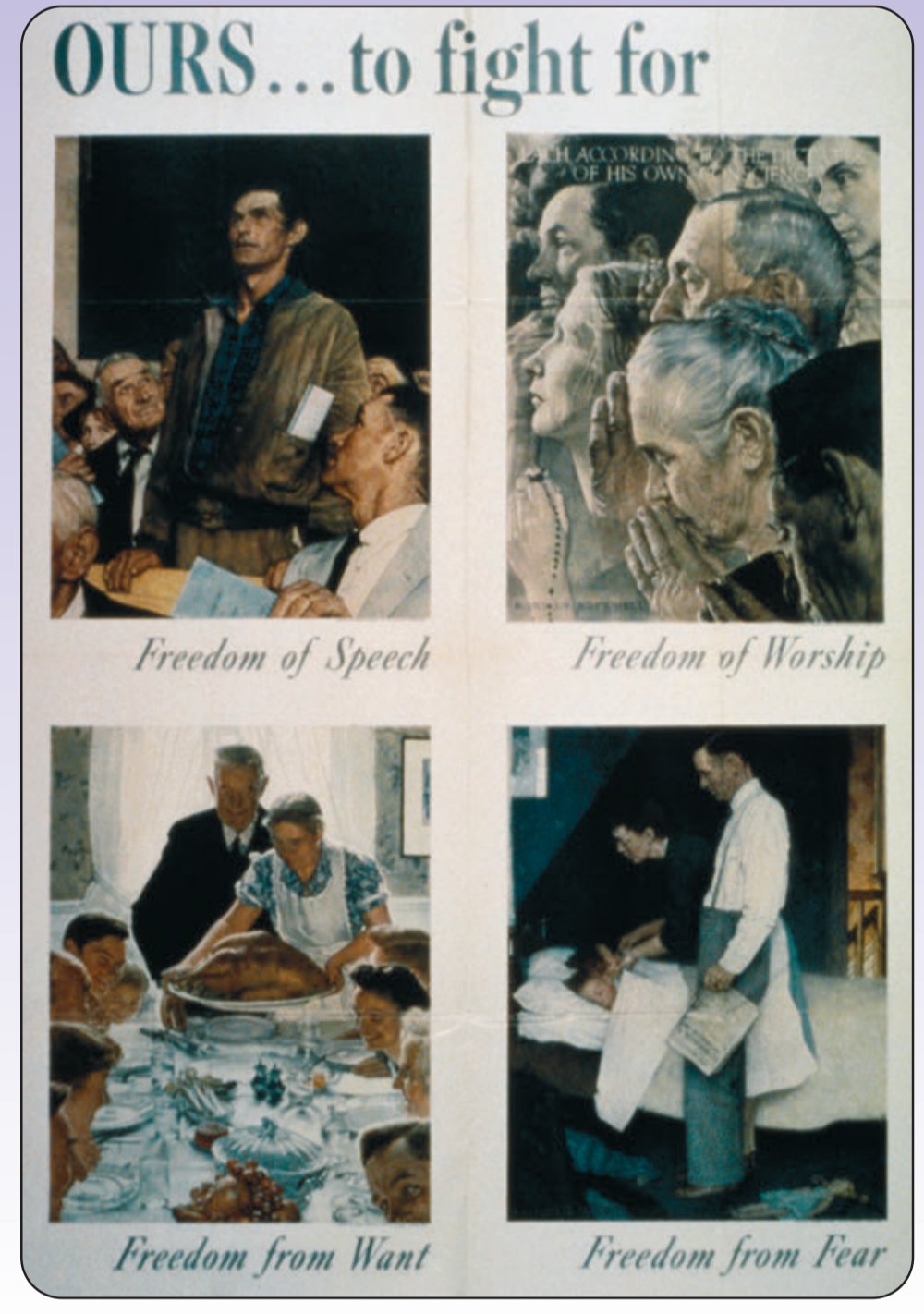
课堂史料 · Source C(宣传海报,美国政府,二战期间)
三、1917 革命(Bolshevik / October Revolution)
- 主因:一战制造的混乱(chaos unleashed by the First World War)引爆革命。
- 结果:列宁领导的布尔什维克夺权,建立 world's first socialist state;革命原则——改善工业无产阶级处境、终结被中产阶级政府剥削。
- 对西方的冲击:共产主义被多国政府视为 highly destabilising、威胁社会秩序;列宁成为西方政府"所恐惧的一切"的象征。西方以"维护民主与资本主义自由"对抗社会主义——
课堂史料 · Source B(Wilson 十四点演说,1918 年 1 月 8 日)
📖 点开查看 Wilson 十四点完整内容(英文原文 + 中文解释)
- Open covenants of peace, openly arrived at — 和平条约必须公开缔结,之后不得有任何秘密国际谅解;外交须始终公开透明。
- Freedom of navigation — 公海航行绝对自由,平时与战时一样,除非依国际约定全部或部分封锁以执行国际盟约。
- Removal of economic barriers — 尽可能消除一切经济壁垒,在参加和平并维护和平的国家之间建立平等的贸易条件。
- Reduction of national armaments — 各国军备减至与国家安全一致的最低限度。
- Impartial adjustment of colonial claims — 公正调整一切殖民要求:在决定主权时,被统治居民的利益应与统治政府的公平要求具有同等分量。
- Evacuation of Russian territory — 撤出全部俄国领土,解决一切影响俄国的问题,保证俄国不受阻碍地自主决定国家政策,并真诚欢迎其加入自由国家社会;俄国所需的一切援助也应提供。
- Evacuation and restoration of Belgium — 撤离并恢复比利时,不限制其与其他自由国家共同享有的主权。
- Restoration of French territory — 解放全部法国领土,归还被占领地区;纠正 1871 年普鲁士在阿尔萨斯-洛林问题上对法国犯下的错误,以保障各国利益下的和平。
- Readjustment of Italian frontiers — 按明确可辨的民族界线调整意大利疆界。
- Autonomous development for Austria-Hungary peoples — 奥匈帝国各民族应获得最充分的自主发展机会,其国家地位应予保障。
- Evacuation of Romania, Serbia and Montenegro — 撤离罗马尼亚、塞尔维亚与黑山,恢复被占领土;塞尔维亚获得自由安全的出海口;巴尔干各国关系依历史归属与民族界线友好确定;国际保证巴尔干各国的政治经济独立与领土完整。
- Turkey and the Ottoman Empire — 奥斯曼帝国土耳其部分应享有稳固主权,其统治下的其他民族应享有生命安全保障与绝对不受干扰的自主发展机会;达达尼尔海峡在国际保证下永久向各国船舶与贸易开放。
- An independent Polish state — 建立独立波兰国家,包括无可争议的波兰人居住地区,保证其自由安全出海口,并由国际盟约保障其政治经济独立与领土完整。
- A general association of nations — 成立普遍性国家联盟,在明确盟约下相互保证大小国家的政治独立与领土完整(即 League of Nations 国际联盟)。
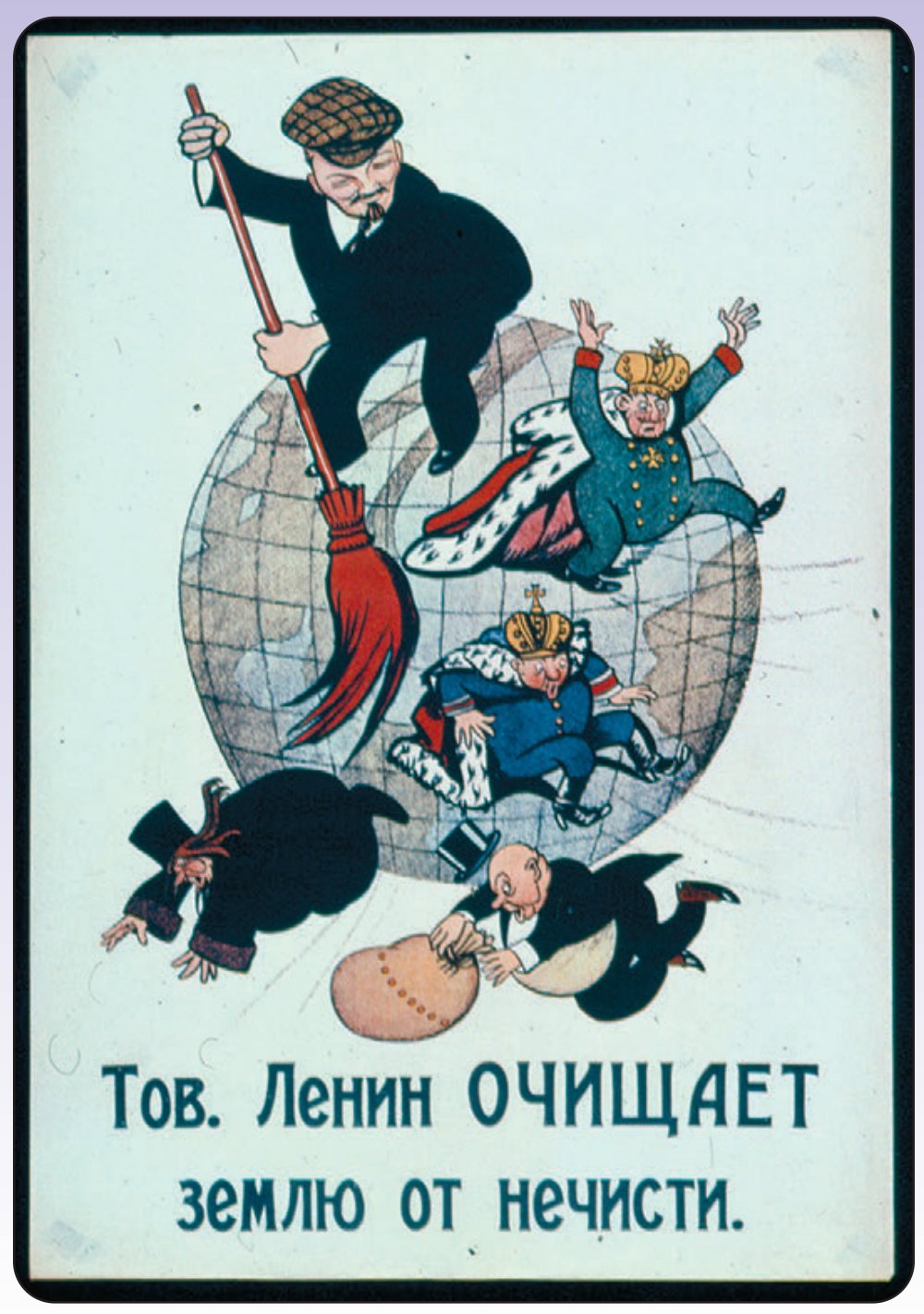
Source B(十四点 / 自由主义国际秩序)与 Source A(列宁扫除旧秩序)、Source C(美国四大自由)构成一组对立:美国用"民族自决、开放市场、集体安全"定义战后秩序,苏联则用"扫除旧世界、世界革命"定义。两套普世叙事互相否定,是意识形态对立的源头。
四、Comintern 1919(第三国际)
- 是什么:1919 年成立的国际组织,协调全球共产主义团体,"facilitate contacts between communist groups throughout the world";又称 Third International,取代一战中分裂的 Second International。
- 做什么:以一切手段(including revolution)支持颠覆资本主义;1920 年确立 Twenty-one Conditions(二十一条件),要求各国党按苏式纪律建组、清除温和社民派。
- 西方为何怕:宣传常煽动他国人民以共产主义名义推翻政府;其活动受莫斯科控制,被视为苏联输出革命的工具。到 大萧条(1930s) 期间西班牙、法国共产党壮大,美国 increasingly alarmed。教材将其列为"1920–30 年代紧张"的成因之一。
课堂史料 · Source A(苏联漫画,1920 年代初)
拓展点:丘吉尔这句 1919 年的狠话,是西方精英对革命最直白的敌意表达,也预示了随后几年的武装干涉。
五、西方干涉俄国内战(1918–1920)
布尔什维克掌权后,Britain, France, the USA and Japan 向布尔什维克的敌人(白军等)提供援助(sent help to the enemies of the Bolsheviks),介入 Russian Civil War of 1917–21。
起因与规模
- 直接导火索:苏俄退出一战并签 Treaty of Brest-Litovsk(1918.3),被协约国视为 betrayal;同时拒还沙俄旧债、国有化使外国资本(尤其法国投资者)损失;处决沙皇 Nicholas II(英王乔治五世表亲),英王拒绝与其"谋杀者"沟通。
- 兵力规模(拓展):日本出兵最多,约 70,000 人,主要占西伯利亚;美国约 8,000 人。目标分散(护送捷克军团、防德、援白),缺乏统一意志。
- 结局:白军溃败,英法美军 1920 年撤出;日本占西伯利亚至 1922 年、占库页岛北部至 1925 年。
最深远的影响:记忆,而非占领
干涉军事上失败、规模有限,但它给苏联留下 长期不信任的深层根源:布尔什维克将这段记忆塑造成"帝国主义侵略",既巩固了国内合法性,也成为日后对西方警惕的历史依据。西方同样记住了"赤色威胁",双方敌意互为镜像。
⚠️ 注意!
- 分清"根源"与"爆发":1917 革命是意识形态对立的根源/冷战前史,冷战本身 1945 年后才爆发。答题别把 1917 写成"冷战开始"。
- Comintern ≠ 苏联政府:它是受莫斯科控制的国际共运协调机构(1943 解散,1947 被 Cominform 取代),别和苏联外交部混为一谈。
- 干涉的"记忆影响"大于"军事影响":规模不大、1920 就撤了,并无长期占领;答题要强调"苏联记忆中的不信任",而非领土控制。
- 意识形态是"底层结构"不是"唯一原因":它是长期伏笔,需叠加后课的国家安全利益(东欧缓冲、势力范围)才真正引爆冷战。
六、本课因果链小结
下一讲(Ch1-2)看 1920s–30s 互不信任如何在这种地基上继续累积;Ch1-4 再看战时同盟为何在 1945 后迅速崩塌。
七、课后练习 · Past-Paper Style(教材 Ch1 Section B 样题)
Sample question(Edexcel Section B · interpretation 题型)
题型拆解:I = "How far";T = "the origins of the Cold War in 1945 and 1946";KW = "ideological differences / personalities / conflicting national interests"。要求用 2–3 个 source + own knowledge 对一种 interpretation 作判断。本题为 Ch1 综合论述题,建议学完 Ch1-4(Yalta/Potsdam)后再写完整版;本讲先搭建"意识形态"一侧的论据。
📌 答题思路(中文 · 点击展开)
立论(支持"owed much to ideological differences"):
- 本讲内容即证据:1917 革命后资本主义 vs 共产主义被视作截然对立;Comintern 把"世界革命"组织化,西方视苏联为生存威胁。
- 1918–20 西方武装干涉在苏联记忆里埋下长期不信任——这是 1945 后猜忌的"史前史"基础。
- 故意识形态分歧是深层、长期结构,没有它,冷战不会以"主义对抗"的形态出现。
反驳(质疑"little to personalities / national interests"):
- 对 1945–46 具体而言,"little to personalities" 站不住:斯大林对东欧的安全需求(缓冲国)、杜鲁门接替罗斯福后的生硬/对抗风格都直接加剧破裂。
- National interests 同样关键:势力范围、德国问题、原子垄断——这些是权力政治,不纯是主义之争。
结论(balanced judgement):意识形态分歧是必要但不充分条件;它提供了对抗的"剧本与敌意底色",但把猜忌变成公开冷战的,是 1945 后具体的人格与国家利益碰撞。可给 "to a considerable extent… but not to the extent of 'little'"。
✍️ EXEMPLAR(英文范例段落 · 点击展开)
To a considerable extent, the origins of the Cold War in 1945–46 did owe much to ideological differences, since the rivalry between capitalism and communism had been cast as irreconcilable since 1917. The Bolshevik Revolution created the world's first socialist state, and the Comintern of 1919 was seen in the West as an organ for exporting revolution and undermining capitalism; this framed the USSR as an existential threat rather than a mere rival power. Moreover, the Allied intervention in the Russian Civil War (1918–20) left a durable Soviet suspicion of Western intentions, providing a deep background of mistrust on which later tensions could build. However, the claim that personality and national interest played "little" part is unconvincing for 1945–46 specifically. Stalin's determination to secure a buffer zone in Eastern Europe, and Truman's inexperienced, confrontational style after Roosevelt's death, turned suspicion into open rupture; alongside tangible national interests such as the atomic monopoly and the German question, these factors were decisive. Thus ideological difference supplied the long-term structure of the conflict, but personalities and national interests triggered its outbreak.
课堂史料快练(教材 Ch1 Skills Builder)
- Source A(列宁漫画):其 message 是什么?西方政府会如何解读它?(见第四节)
- Source B(Wilson 1917 演讲):哪些 Wilson 原则被提及?如何体现?如何使美国承担更大世界角色?(见第三节)
- Source C(四大自由海报):共产主义如何威胁 Source C 所呈现的美国自由?(见第二节)
提示:三题都考 inference(推断) 与 source–own-knowledge 结合,是 Section A/B 史料题的基本功,先练熟。
Superpower Relations and the Cold War, 1944–90 · Ch1-1 意识形态根源 · 教材 Steve Phillips, A World Divided